San Francisco Should Pay Attention to This

Feb 26, 2014

Austin, TX, has beat out the Bay Area as the most attractive location for tech companies.

The article referenced below from the Austin Business Journal reports that Austin has passed San Francisco as the best city in which tech companies should locate, according to a survey by Savills, Plc, a major international property firm. Why? It’s a lot about affordability. It’s a lot about the amount of young talent, and that is highly dependent on the affordability of housing.

According to Forbes, the median home price in Austin is $221,000, while in SF, we have crossed the $1 million mark. Median income there is $53,000. Here it is not that much higher–$76,000. Consider the 50% gap between incomes vs the almost 500% gap between home prices. This translates into a much happier and plentiful lifestyle for young tech workers in Austin than in San Francisco, notwithstanding some weather advantages we enjoy. If I get paid only 33% less there, but my housing cost is almost 80% less, I’m smart enough to figure out that is a better life style.In fairness, other studies still show us still on top, but we are losing ground fast.

There are some of the wealthy who recognize the risk in allowing capitalism to simply run unfettered. The Patriotic Millionaires and Wealth for the Common Good may be among them, as well as a few Republican members of Congress. But the weight of Republican agenda does not recognize the need for redistribution, even if proceeds are to go for infrastructure, which benefits everyone. As Paul Krugman writes today, much Conservative rhetoric goes to blaming Obama or blaming the problems of schools for the dramatic rise in inequality. That’s not the explanation, and only part of the answer.

No one should doubt the sheer force of such economics in determining destination–haven’t we seen enough evidence in textiles and other forms of manufacturing to be aware? Business can move easily and rapidly now–to Austin or to Mumbai.

This is just a reminder to all–wherever you may feel your wealth is centered: better consider the ramifications of not addressing inequality. For San Francisco wealth, there is not only a consequence to the quality of life we enjoy here, but also a negative consequence to the wealth of those heavily invested in local technology.

I suppose the question is, do the investors in Bay Area tech ventures care enough to want to do something about it, given that wealth can easily follow the migration to Austin,and then to Tel Aviv or Stockholm, which also rank high on the list of attracting tech companies?

But if that migration happens, what are the rest of us left with here in San Francisco? Imagine a local recession which could be quite painful.

References:

Patriotic Millionaires

http://wealthforcommongood.org/

http://www.bizjournals.com/sanfrancisco/blog/techflash/2015/02/austin-beats-out-san-francisco-as-no-1-tech-city.html?ana=e_sfbt_rdup&s=newsletter&ed=2015-02-26&u=NBan6BRsdENquGy4qBdg3A021caa75&t=1424978247

http://www.forbes.com/places/tx/austin/

http://quickfacts.census.gov/qfd/states/06/0667000.html

Personal Observations

Personal Observations

Feb 13, 2015

It’s one thing to argue the economics of inequality. The reality is that there are different and conflicting interpretations of the data and the theories. There is ambiguity. Personal biases play in. Some feel the most important thing is to allow motivation to be undisturbed by taxation, that opportunity abounds, and others feel the wealthy should help the underprivileged in one way or another.

It’s entirely another thing to experience the realities of the world around us on a daily basis. Sometimes, what we see with our own eyes, in the halls and on the streets of our city, on the back roads of the world, tells us more, with no ambiguity. There is a reality.

Yesterday, I had the privilege to attend a San Francisco Symphony performance. Herbert Blomstedt, now about 87, was conducting Sibelius and Mozart.

I found a hall filled to about 2/3 capacity at 10am on a weekday, tickets very cheap ($40) at this “open rehearsal,” in which we could see and hear this elderly icon graciously instruct his large orchestra, and then conduct them through the complex and beautiful compositions.

I felt deeply moved by the music and by the whole scene. Blomstedt, without a glance at his music, so clearly calling out with his hands to the oboes, then the bassoons, and to each section of instruments, calling up their volumes in one and down in another. The musicians, each with an accomplished specialty, some in their twenties, some in their seventies, each in complete command of their unique instruments and roles.  All of it coming together in a way that transcends the imagination of just how–how the composer dreamed it up and wrote it down, a different score for each of the dozens of instruments and individual parts; how the conductor memorized it and knows each part, adding his own interpretation; how the musicians have been able to devote their entire careers to playing a viola or a french horn, with excellence. All for our pleasure, and for a short period of almost touching the essential beauty of life.

As I listened and watched, I considered the cost of all this–the hundreds of musicians and support staff coming from all over the Bay Area, maintenance of the great hall, and all of it. The hundreds of years of devotion to these exquisite compositions.

I reflected on how fortunate I am, having the privilege to be touched by such accomplishment and beauty. I thought of those in The Ukraine, in Nigeria, in Syria and Iraq, in rural India, and in the homeless shelters of our own cities, some only a few blocks from this great hall. We have 45 million in poverty in our country. I imagine none of them would regard even the $90 for two tickets to this performance to be inconsequential in their daily survival needs.

How can we avoid being reminded vividly of the privilege of our lives here, realizing that much of the world will not have this opportunity in their lifetimes? Here in San Francisco, one of the wealthiest cities in the US, the wealthiest country in the world. Maybe it’s easy to be remain oblivious, surrounded as we are by such privilege and wealth.

Branko Milanovic, noted scholar of inequality at the World Bank, has analyzed available global data to conclude the following: some 50-60% of your economic destiny today is pre-determined by the country in which you happen to have been born; another 20% is pre-determined by the wealth of your parents. Thus, almost 80% of your economic destiny is pre-determined. And, he speculates that when the data permits analysis of gender, race, religion and other factors which are givens at birth, the percentages will be far higher.

For those who haven’t seen this conclusion before, it doesn’t mean there is no chance for pulling oneself up by the bootstraps, even if one was born of color, female, in Uganda, of poor parents, or an equivalent set of pre-determined obstacles. Some do. However, the data clearly shows that the “chance” of your “making it” with such birth handicaps is far lower than for the rest of us. It is “almost” impossible. My parents were relatively poor, but I was born in the USA. I’m male, Caucasian, Protestant. And, that was a very different time, a very different political scene, and a very different economy than today. There was more opportunity.

Some in this area who live in poverty, some who are working with very tight budgets, some who have been forced to move to the distant suburbs of our San Francisco by our increasingly unaffordable housing, many, many, will not be able to experience the Symphony. Ever. And, as Milanovic says, the vast majority of those born in the wrong country of poor parents, never will. Ever.

I have a wonderful young couple who clean my home biweekly. They are immigrants. They work very hard, do an excellent job for me, always willing to do anything extra that I need. As I was recording these thoughts today, the husband arrived , and with great trepidation took me aside to ask whether I could consider an advance on future cleaning of my home, so that he could buy the little things they need for the new baby they are soon expecting.

Republicans and Inequality

Republicans and Inequality
Feb 9 2015

There can be no dispute that we are seeing a staggering rise in inequality in the US. This has rightfully become a political issue worth debating (and resolving).

When a right wing academic chides his own side of the political spectrum for disingenuously promoting a political solution to inequality, his analysis deserves reading, and he deserves recognition for intellectual honesty. This is the message from Ramesh Ponnuru of the American Enterprise Institute, a conservative think tank, in today’s NY Times.

He’s pointing out that Republicans have started blaming the Obama administration and the Democrats for the significant rise in inequality, and have even been so bold as to suggest that Republicans will provide a solution, less inequality, if only we elect a Republican President in 2016, giving them control of all three chambers of our federal government. If ever there was, this is truly the pot calling the kettle black!

Ponnuru explains–there is no real interest among the consensus of Republicans in addressing inequality.  There are no visible Republican proposals which would improve inequality. It’s worse. He goes on to explain a critical variable: That the Republican economic centerpiece is just economic growth. That’s all. He clearly explains that when growth is strong, everything else constant, guess what?  Inequality increases! So, in essence, the Republican agenda is indisputably inconsistent with improving inequality. It’s really that simple.

I’m impressed with this accurate and honest explanation, and most especially coming from a sound voice on the Right. He advises Republicans to give it up–it’s dishonest.

On the other hand, Republicans can honestly argue that they might be able to make the economy grow faster than Democrats can. Comparisons between Democratic and Republican administrations’ growth records across the Twentieth Century would not lend credence to that argument, at least not based on history. Nevertheless, I would trust Republicans might honestly believe they can do that.

However, they may not be able to pull it off.  As Ponnuru suggests, removal of some of the restrictive, burdensome and ineffective regulations would be helpful (although many have been added under Republican administrations, as well as Democratic).  So, they will find me with an open mind, interested, if they think they can grow the economy faster. I would listen to their proposals. Growth is good, beneficial. But, growth alone will not reduce inequality.

Ponnuru accurately observes that the American population still seems more interested in jobs and opportunity than in measures to reduce inequality. Faster growth might improve opportunity. Wages might increase. But wealth and income disparity will not diminish–it will worsen, unless there is some form of redistribution.  I believe it indisputable that at some extreme of inequality, depending (of course) on other variables, any country will eventually face revolution. I suppose the Republicans who really understand economics and history are banking on the hope that inequality will (somehow) level out on its own. This is known as the “Kuznets curve,” no longer believed by most economists. And in the meantime, they are betting that improving jobs and wages (a little) will suffice. The real questions are (a) is it getting worse? (b) at what rate? and (c) and how far are we from the precipice?

Redistribution is the only answer to reducing inequality. There is no other answer. Redistribution can come in many forms, however. Some are particularly painful to conservatives–like taxing the rich to provide welfare to the unemployed. But, there are more palatable forms of redistribution. Schools and infrastructure would be good places to start. We shouldn’t even be debating these priorities. They contribute to opportunity for all, which Republicans claim they support. These are properly called redistribution when the wealthy pay for more than their share of the benefit. But isn’t that better than wondering whether your children or grandchildren will have the wherewithal to hire enough vigilantes to protect their gated homes?

The rationale for the continuing tolerance among Americans (and for Chinese and other unequal developed nations) for rising inequality is perhaps best explained by a parable from the noted economist Albert Hirschman in 1973. Paraphrased by Debraj Ray, this is it:

“You’re in a multi-lane tunnel, all lanes in the same direction, and you’re caught in a serious traffic jam.

After a while, the cars in the other lane begin to move.  Do you feel better or worse? At first, movement in the other lane may seem like a good sign: you hope that your turn to move will come soon, and indeed that might happen. You might contemplate an orderly move into the moving lane, looking for suitable gaps in the traffic. However, if the other lane keeps whizzing by, with no gaps to enter and with no change on your lane, your reactions may well become quite negative. Unevenness without corresponding redistribution can be tolerated or even welcomed if it raises expectations everywhere, but it will be tolerated for only so long. Thus, uneven growth will set forces in motion to restore a greater degree of balance, even (in some cases) actions that may thwart the growth process itself.”

Americans and Chinese are still believers in the Horatio Alger story, but reality for the great majority is that bootstrapping it is harder than ever.

It’s not so easy to get into that fast lane. The traffic there is moving faster and faster these days. Those Bentleys and Rolls Royces only seem to brake to admit those of their own kind. Expensive private high schools in my neighborhood, feeders to Ivy League Universities, cost $35-40,000 per year, while the San Francisco public schools must get by on a budget amounting to about $9,000 per student.

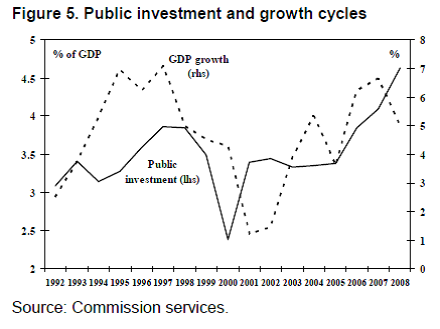
The Republican stance on key economics defies rationality. For example, to promote growth, few would disagree that appropriate spending on our infrastructure is needed and would greatly benefit growth. Here we are talking about worn out roads and highways, bridges, tunnels, inadequate fast rapid transit, tired airports, our power grids, and even our internet (slower than many other nations). Note the powerful correlation between public investment and economic growth:

Paul Krugman has argued the key point repeatedly and does so again in today’s NY Times. Essentially, it comes down to the Republican attitude of severe austerity–that reducing debt and meanwhile reducing government (continuously) is the answer. Europe is demonstrating now that this cannot be the entire answer. I argue that the Obama administration (and the Federal Reserve) deserve great praise for rather miraculously dragging our economy to this stage of growth while continuously restrained in proper tools to do so, by Republican excessive adherence to austerity. Maybe austerity can be understood for Japan, with astronomical debt, but certainly not for the largest economy in the world, the reserve currency of the world.

If we are to continue across the next few years with Republican control of the purse strings, just how are they going to grow the economy? Removing regulations alone will simply not do it.

A better statement from Republicans can be suggested: “We don’t think inequality is important to fix. It is simply a factor of motivation, which is a good thing for everyone. As to those with motivation who have obstacles to their achievement, we’re sorry, but we simply can’t distinguish between those who really want to work and those who don’t, so we don’t favor any form of redistribution. We will only be able to contribute to improved opportunity for those who can take advantage of it. We hope you all continue to agree with us.”

I will close by acknowledging there are poor legislators on both sides of the aisle, as there are wise voices on both sides. However, it is now the Republican Party which has allowed itself to be hijacked by extremists on the far Right, such that it is unlikely Republicans can even stimulate growth. And, as Ponnuru so rightly states, Republicans have no interest in reducing inequality.

In just previous posts, I argue that Republican policies (neoliberalism) are largely responsible for the rise in inequality across the last 30 years.

References:

Paul Krugman: http://www.nytimes.com/2015/02/09/opinion/paul-krugman-nobody-understands-debt.html?hp&action=click&pgtype=Homepage&module=c-column-top-span-region&region=c-column-top-span-region&WT.nav=c-column-top-span-region

Ramesh Ponnuru:http://www.nytimes.com/2015/02/09/opinion/lets-not-mention-inequality.html?hp&action=click&pgtype=Homepage&module=c-column-top-span-region&region=c-column-top-span-region&WT.nav=c-column-top-span-region&_r=0

Debraj Ray on Hirschman: http://www.econ.nyu.edu/user/debraj/Papers/Uneven.pdf

Postscript re Republicans

Postscript re Republicans
Dec 15, 2015
If you’re kind enough to read my blog and haven’t yet read the just previous posting, please look it over before reading this one. This is a postscript resulting from two things: One is a very useful exchange I had with a friend whose opinions I value, a very respected economist and professor. He doesn’t agree with my conclusions. I probably haven’t changed his mind, and he hasn’t changed mine, often the case in a good debate. However, I took away a number of good points and benefitted greatly from the exchange. I’ll explain below, without identifying the person, because I don’t pretend to be able to represent his complete views on the subject.
The other is from the New York Times of today. There is an opinion piece by Paul Krugman and a piece by Robert Pear. Both result from the outcome of the omnibus funding bill just approved by Congress.  References are below. Again, my focus is on the behavior of the Republican Party, which I believe is very poorly serving our country.
One of the reactions to my post of yesterday was to argue the point of who/what is responsible for the rise in inequality experienced in most countries. Here in the US, I argued that the Republicans and their policies are the prime culprit. My friend argued that globalization is the cause.


Just what is “globalization?” “Globalization and Development” was the title of my MSc. program in London during 2012-3. Many definitions were discussed in class. Merriam dictionary’s is good for today’s purposes: “ the development of an increasingly integrated global economy marked especially by free trade, free flow of capital, and the tapping of cheaper foreign labor markets.” Note that these are prototypical Republican agenda. This is what American business wants. Republicans of today are committed to advancing the private market as a solution to most all our needs, while starving government. Republicans have accelerated globalization, in the form they prefer, for the benefit of private capital.

Technology and transportation are companion elements to globalization, the recent accelerated development of both of which has enabled the rapid spread of globalization in it’s third wave (1870-1914, 1950-1980, and 1980 forward). 

My friend is right. Globalization has resulted in inequality–inequality between countries (failure to converge in incomes) and inequality within countries. The latter has happened because cheaper foreign labor accompanied by faster transportation and advancing technology has moved jobs overseas. In my home town in North Carolina, almost the entire local employer base in textiles and furniture was moved to China and elsewhere around the globe. Improved technology provided for communication and remote management with China. Improved transportation enabled China to ship heavy sofas to the US at substantially lower prices than for US manufacturers. Enhanced financialisation and open borders enabled US producers to move labor, factories, capital and funds flows rapidly around the world. Enhanced “flexibility” for US employers pursued by Reagan and Republicans since has enabled them to abandon North Carolina workers on a moment’s notice and leave them without support or new skills training. These policies are central to the Republican agenda.


Globalization also means facing how pollution from China affects the US and vice versa. We two are the top producers, and we may endanger the planet if we don’t cut back. Just now, legislators are struggling to restrain our use of fossil fuels. This necessity costs jobs for coal miners in Kentucky and elsewhere. I believe this action is necessary, but what’s lacking is government and industry working together to re-train and support workers who lose jobs. China is far ahead of the US now in fully accepting the role of government to pave the way for its industry, with infrastructure, research, and significant investment where private capital cannot do the job. In the US, Republicans even resist government investment to develop solar. Of course there will be some failures when government invests in pioneering business where private industry will not, but that’s a justified role of government. That’s how the internet was first developed–by the US government, not by private industry.

My friend pointed out correctly that the support for globalization comes from Democrats as well as Republicans–e.g., note the impact of the Clinton administration and the retired Clinton activity on advancing globalization. However, I do believe Republicans and their “neoliberal” policies have been the major drivers of globalization. It would have happened anyway, most likely, but under Democratic philosophies, I believe there might well have been far less impact on inequality. We would have retained worker protections which have been whittled away since Reagan.  We could have better managed the danger of free flowing capital around the world. 


He reminded me that Wall Street supports both parties. Yes, but according to the research behind Paul Krugman’s article of today, starting with support for Romney in 2012, Wall Street money swung much more heavily to Republican candidates and policies. 


I’ll try to tackle globalization more in another post–can it be restrained? How? What would be some wise global policies to enable a more fair and sustainable outcome to the continuance of globalization? One thing for sure–the optimal development of globalization is not just uncontrolled free borders, free markets, free capital, and “flexibility” for employers. If capitalists feel everything about their corporations needs to be carefully controlled, why do they think that world markets need no controls? Why is that different? Isn’t good management all about controlling outcomes?


For now, just consider this: The graph below displays countries which have experienced the greatest globalization, as defined in the chart:


Note that Singapore, Ireland, and Switzerland are now more “globalized” than even the US. But, the movement of inequality (measured the the Gini index) has been dramatically different for these 4 countries. What have Singapore, Ireland, and Switzerland done to manage the impact of globalization on their populations, their pursuit of equality, that we have not?

Here is a comparison of the Gini indices (measurement of inequality–higher is worse) for the four:

Ireland             35.9 (1987)                           33.9 (2010)
Singapore          NA                                      46.3 (2013)
Switzerland     33.1 (1992)                           28.7 (2012)
United States   34.0 (1985)                           47.6 (2013)

While Singapore appears to have been consistently high, not increasing much (based on other data), Ireland and Switzerland reduced inequality over roughly comparable periods, while the US significantly increased inequality.

And, what about Finland and Norway? They have also been actively engaged in globalization and yet have kept inequality remarkably low–both below 26.0 in 2011, about equal to where they were in 1999. Between 1985 and 2008, income inequality rose in most OECD countries, but not all. It fell or held constant in Turkey, Greece, Hungary, France, and Belgium.

The mentioned constitute a good list of outliers to the trend of increasing inequality. It’s not just one country with unique characteristics that managed it well. It’s not just non-participants in globalization which performed well in inequality. How did they do it? Part of the answer is in how much the government did to reduce market-generated inequality. As shown in the chart below, the US diid less than most in the way of redistribution.

                                Source: The Economist Nov 26 2013

As a result of our form of capitalism and our reduced form of social welfare and related investments to benefit lower classes, the income of the top 20% and especially the top 1% significantly outpaced the rest of our population between 1979 and 2011, both before and after taxes:

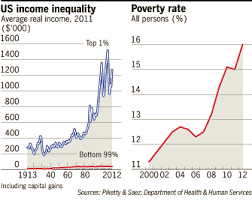
And the US poverty rate today of about 14% of our population has not declined from its level in 1967. In a word, things have not been getting better in the US since Republican agenda (sometimes called “neoliberalism”) began to dominate our economics:

Yes, we have had Democratic administrations during this time, and they too have paid too much homage to the neoliberal economics, whether by pressure of Republican political force, the pressure of big conservative money, or by simply failing to see how far the pendulum was swinging. Maybe it just wasn’t clear until some of us began to marvel at the atrocious behavior of the GOP during the 6 years of the Obama administration.

The point was also made in response to my previous post, that it’s not just the Republicans opposed to expanding immigration–in fact, many of the poor and middle class Americans oppose immigration, because immigrants are taking some of the jobs in the lower income category, driving down wages–restaurant workers as an example.  Yes, with apology for the necessity to speak here in broad terms when indeed there are so many variations of philosophy within both parties, I nevertheless think that almost all of the anti-immigration rhetoric preceding the recent election came from the Republican side of the aisle. I believe this is just one of the “tools” conservatives realize they can use to lure Americans to vote their way (along with freedom to own and carry guns, opposition to abortion, continuing tax reductions, etc.). In my view, these points are not the major wins Republican leaders seek (except for the tax reductions). This is a carefully developed marketing program, designed to appeal to the poorer segments of our population.

I’m in favor of some form of amnesty for those illegals within our borders who have worked and paid taxes for a period of time. I’m in favor of increased quotas. I believe it’s time for us to recognize in our globalized world that our responsibilities do not stop at our borders. We must start to think as citizens of the world.

Unfortunately, it is not possible for any country to just accept all immigrants who want to come. If we could, it would solve a great deal of global inequality, but the disruption to any receiving nation has to be managed. In-migration has to be paced. Along with increased immigration, we need increased equal education for all, to enable us to keep advancing the US economy in service and information sectors. As shown in this chart, we do not need many immigrants to support our agricultural segment. We need them to support the advanced sectors of our economy. We have to recruit well educated immigrants and train and educate others to do that work.

The omnibus spending bill was approved by Congress this week, after much fear that Republicans would halt spending in objection to Obama’s recent executive action on immigration. Ted Cruz apparently tried, but as a credit to more reasonable Republicans, that didn’t happen. However, an important element of Dodd-Frank regulation of banks was substantially weakened as a rider to the spending bill. Republicans held the funding of government hostage to this payoff to Wall Street, as well as to Blue Cross and Blue Shield tax breaks, relief from environmental controls for cattlemen, and tax experts said the bill “bestowed favors on all sorts of constituencies,” ending up “a Christmas tree bill.”
Perhaps the most significant of these was the weakening of one particularly key part of bank regulation. Having spent most of my career in banking, I feel qualified to comment on it. My career involved lending of most all types–commercial, real estate, and consumer. I’m not a huge fan of bank regulation, because we have done it so poorly–far more complicated and costly than it needs to be.

A great deal of today’s banking regulation is a massive waste of time and money. For example, the increased regulation of mortgage loans under HMDA (the Home Mortgage Disclosure Act) is a huge and expensive burden to regulators, banks, and to borrowers. If you have bought or re-financed a home in recent times, you know. There are dozens of documents to sign. No-one reads them. There are many forms to fill out. Regulators comb through banks files in examinations to see if every rule and document requirement is met. Much of this could be eliminated if we had just a few rules for banks, whose deposits are protected by the FDIC. We could require banks only make home mortgage loans with 20% minimum cash down payment. We could require banks not sell more than 80% of the loan, or that banks retain the first 10% of the risk of all loans that are sold.  Just these regulations could replace endless paperwork, save millions if not billions, and strengthen bank regulation. 
But such rules are not favored by banks and their Republican friends. Big banks would rather suffer the burden of complex detailed regulation in order to still be allowed to make riskier loans and to sell 100% of the loans if they prefer–leaving the risks to the buyers of those loans.
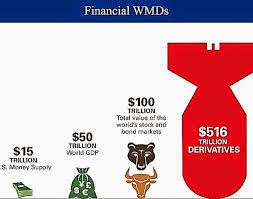
Bundling these loans up and securitizing them into tranches with suggested levels of risk and return (sometimes called “financial weapons of mass destruction–WMD’s”) is what led to the start of the economic depression beginning in 2008. The rights of big banks to trade for their own account in these kinds of instruments was just what Dodd-Frank was created to eliminate. The rider to the omnibus bill, added by Republicans, weakened that protection to American bank investors and taxpayers substantially. These protections are not wasted regulation like those cited above. They are important. Republicans have scuttled them with their amendments to the omnibus bill. In the meantime, it is hard to find a segment of capitalism in which executives are paid more than in the financial sector. Jamie Dimon of Chase was paid $20 million for 2013, notwithstanding trading losses of $6 billion a year earlier and fines for $1 billion in 2013. 
Due to the exchange with my esteemed friend, I want to say again (if I did not do this sufficiently in the previous post) that both Democrats and Republicans are at fault across the Board. The tax advantages that Democrat Harry Reid added to the omnibus bill to satisfy the casinos in his home state of Nevada are one example–similar to all of Republican Mitch McConnell’s earmarks for Kentucky coal mine operators. Tax reductions have taken place in both administrations, as have added burdensome and ineffective regulation. Pork barrel “earmarks” are inserted by legislators of both parties. Hilary Clinton’s courting of Wall Street donors is another example.  I regret that the justification usually given by Democrats is probably unavoidable in the hard scrabble world of politics: “The Republicans drive these issues like big donor money, and we can’t go to a gunfight with only a knife.”
Ultimately, regardless of how one ranks the influences that caused the rise in inequality, I would like to add two points to what I said in the previous post:
  1. No matter what one believes to be the cause (s) of our high inequality, Republicans have done virtually nothing to try to restrain it across the last 30 years, unless one gives credit to attempts to strengthen the private sector vs. workers, in order to raise growth–the “trickle down” approach. But as we know from the last 30 years with steadily rising inequality, there hasn’t been any trickle down. We still have 45 million Americans categorized as in poverty in the US and wages of the middle class have hardly moved. Jobs have become insecure.
  2. As to the future–can anyone point to current Republican policies, legislation proposed, that is intended to reduce inequality, restore more equal opportunity, other than trying to raise growth by more power and freedom to the private sector?
Thank you for reading my posts!: I get so few comments to this blog, and I am most grateful to my friend for stimulating discussion, asking me to clarify, and educating me. I would be most grateful to any of you for doing the same, regardless of whether you agree with me or you do not!

The Pope or the Republicans…?

The Pope or the Republicans…?
December 12, 2014


Across my lifetime, I never thought the Republicans were the best party for social justice, although I’m told they once were. I spent a career in the private sector, during which I generally thought the Republicans were best for economic wisdom. As a lifelong registered Democrat, I voted Republican a number of times. But, I have felt growing concern with how the world and our country have changed in recent years.  And after a year (2013) studying economics in London, and observing for a year since,  I have concluded that the “Grand Old Party” has lost its wisdom on economics (and a few other important attributes) along the way.  I am now planning to look to the Pope for more economic guidance than to the Republicans.


Consider the message from the Pope when speaking to the European Parliament recently, as reported in the Huffington Press:
“To cheers from both the Eurosceptic and left-wing members, the Pope railed against the ‘certain selfish lifestyles, an opulence that is no longer sustainable’ and the ‘frequent indifference to the world around us, especially to the poorest of the poor.'” 


Quoting Pope Francis: “To our dismay we see technical and economic questions dominating the political debate, to the detriment of genuine concern for human beings. Men and women are reduced to cogs in a machine, items of consumption to be exploited.The result is that when human life is no longer useful to the machine, it is discarded without qualms, as in the case of the terminally ill, the elderly who are abandoned and the children who are killed in the womb. It is a great mistake when technology is allowed to take over, and there is a confusion between ends and means. It’s an inevitable consequence of throwaway culture and uncontrolled consumerism.” These characterizations apply to the US as much as to Europe, if not more so, considering that our inequality and social mobility is worse than that of most European countries.

I don’t agree with all of the Pope’s views, abortion rights as an example. However, I do agree with much of what this Pope stands for. He’s a great transforming voice in the Catholic church and in religion today. Of course, some will say, what does the Pope know about economics? And what kind of economic message is conveyed in his views? He is calling for countries and companies to restore recognition of people as human beings, as opposed to units of production, who can be discarded as soon as capitalism finds better alternatives for production, without obligation to help re-train and re-deploy, without obligation to provide gainful and equal opportunity for all. He is insisting that citizens are not just automatons whose fulfillment is met only by constantly increasing consumption. I relate to his objection to selfish lifestyles and opulence, when there remain hundreds of millions in poverty, significant segments in most all countries in the world. The US Census Report says we have 45.3 million US citizens living in poverty, as of 2013.

These are most definitely economic factors. They are reflections of the harmful excesses of an unrestrained capitalism, the American version of which may be the most harsh on the middle class and poor. These behaviors cost our country and our economy. These are reflections of the Tea Party, the Libertarians, the Conservatives, mostly represented by the contentious and fractionalized Republican Party of today–the party now distinguished for its inability to propose any meaningful legislation, focusing all its attention on criticizing President Obama and the Democrats, and reducing government, at the expense of schools and infrastructure, as well as worker protections and social welfare.

What the Pope is decrying can be considered under the broad umbrella of “inequality,” a term Republican refuse to use and consider. They prefer “poverty” because that term suggests I can choose to help if I want to, whereas “inequality” suggests I am responsible to help–I failed to provide for others as I should have. Republicans don’t want any obligation assumed, since that would invite another pejorative word–“redistribution.”  Some find that the essence of this position by the Right is based on deep seated ideology, such as value of the individual (as opposed to the group), the belief that anyone can make it here (and if you haven’t, it’s your own fault), and favoring opposition to government doing much more than protecting private property rights, rule of law, and national defense. Unfettered capitalism should be left to do the rest. 

In contrast, the Democratic view can be summarized as valuing the collective, recognizing that equal rights means equal opportunity that requires work and protections to sustain. Democrats understand that some citizens simply need support from the state, which should be active in its partnership with capitalism, and should restrain some of the excesses of uncontrolled capitalism. Consider the agreements reached for the Millenium Development Goals. The much debated process ended up agreeing that while markets drive economic growth, they need the public sector to support them. The MDG goals also ended up agreeing that poor countries must have active support from rich countries. We were a major party to these global MDGs. Have we forgotten–government has a significant role, and we should concern ourselves with the needs of developing countries and their citizens? Consider what might happen if we really applied these principles in our trade and immigration policies.
As to the Republicans, I’m forced to agree with the views of Thomas Mann and Norman Ornstein. They wrote a best selling book in 2012. Mann is a Senior Fellow at Brookings, a centrist Think Tank, and Ornstein is a scholar at The American Institute, a conservative think tank. Indicating they have come to stark conclusions of today’s Republican Party with regret, they write, “We have been studying Washington politics and Congress for more than 40 years, and never have we seen them this dysfunctional. In our past writings, we have criticized both parties when we believed it was warranted. Today, however, we have no choice but to acknowledge that the core of the problem lies with the Republican Party.The GOP has become an insurgent outlier in American politics. It is ideologically extreme; scornful of compromise; unmoved by conventional understanding of facts, evidence and science; and dismissive of the legitimacy of its political opposition. When one party moves this far from the mainstream, it makes it nearly impossible for the political system to deal constructively with the country’s challenges.”

I hold Republicans largely responsible our high inequality, driven by their economic policies since around 1980, sometimes called “neoliberalism.” There are other contributing factors, such as technology, globalization, and financialization, but Republican policies have significantly influenced these as well. 

So, just how severe is our inequality in the US? Just how successful have the Republicans been in advancing this set of views?


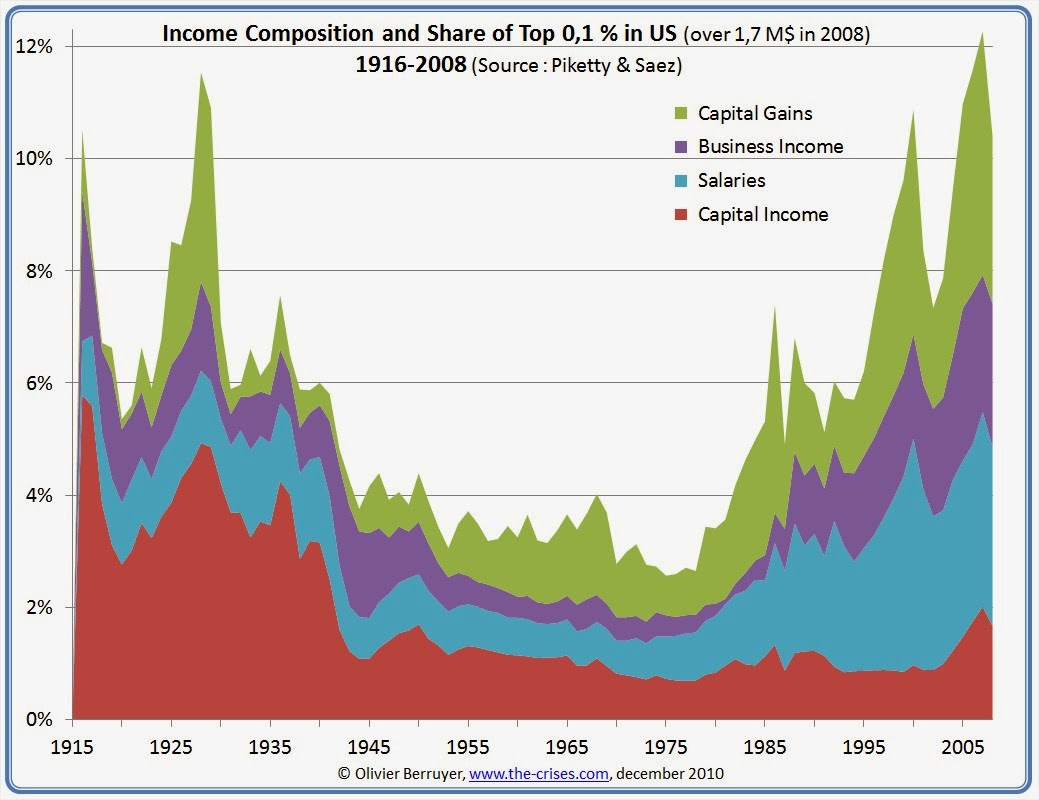
The answer is very successful. We are now back to the 1925 peak of inequality, the “robber baron” peak. We enjoyed a period of improvement between 1925 and 1975.  Recognizing that some “re-balancing” of the power of labor and capital may have been necessary in the 70’s and 80’s, the pendulum has now swung way too far to the Right. Republicans have done an excellent job of persuading Americans that Democrats and big government are responsible for their lackluster wages and poor jobs prospects, by arguing that the Democrats have hobbled capitalism with too much government and regulation–just get rid of all that, and everything will soon be hunky-dory. The Republican argument is that all we need is more growth! More growth comes only from unfettered capitalism. That’s the argument.  

There are two main problems with this argument:

First, it is certainly not evident that growth alone will reduce inequality, without any form of redistribution (either via increased taxes on the wealthy, or by simply re-allocating the existing government budget–federal, state, or local–to such as education and infrastructure from such as military or excessive government support for the relatively wealthy elderly, as examples).


Actually, for the world’s largest economy, we have had pretty decent growth since 1980, when all the ups and downs are smoothed out, but inequality increased steadily, regardless of the growth. Conservatives can argue that even more growth might do it. But, what about China?  From a much smaller base in 1980, China’s GDP grew at about 10% annually across this period, becoming the 2nd largest economy, and their inequality index has risen at about the same pace as ours. Once an egalitarian country, China also has very high inequality now. China has proven that growth can reduce poverty (from 65% of the population in 1980 to 10% now), but not necessarily inequality–that is, not without government intervention. There is certainly no evidence of the “Kuznets curve” revealing itself (inequality actually correcting for itself without government actions).
Second, how is growth to be achieved? What will induce greater growth? Conservatives argue that reduced government intervention (reduced regulations) will raise growth. Yes, in some cases, done selectively, that will help. We have many regulations that are burdensome on business. This posting is not intended to address the waste in government, but if properly addressed, there is more than enough there to allow for significant progress in education and infrastructure without raising taxes on anyone. It is indeed a major opportunity not addressed by either party. But until it is, we can’t just starve government without re-allocating and re-engineering what government does.  Just reducing regulations will not produce the result. And regulations have come from both sides of the aisle.

Then, Republicans argue that more foreign trade will do it. Yes, that can help, but there are complications. One is that conservatives are not fair in WTO and other trade negotiations–they want to protect our producers and persuade others to lower barriers. Another is that the open borders forced upon developing countries by neoliberal policies adopted by the IMF have had severely deleterious effects…except for the benefits to developed country producers, or course. 
A third argument is the “supply side” one–reduce taxes on the wealthy and they will invest it in productive jobs producing businesses.  Yes, in theory, but in the period of the highest marginal tax rate (above 90%), 1951-1963, the economy had outstanding growth–3.7%. And, we have reduced taxes from a high of 65% (top incomes) in 1980 to below 40% today–and look what happened to inequality across that period–it rose steadily, wages stagnated, worker protections deteriorated, and we have a highly dissatisfied citizenry now.  So, there is good cause to question whether the wealthy are now putting their savings into jobs producing investments. Maybe it’s now going mostly into luxury homes, cars, yachts, art, and passive investments in financial markets.
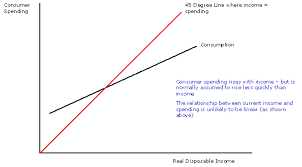
Beth Ann Bovino, Chief US Economist at Standard & Poors, a very capitalist organization, wrote recently: “One of the reasons that could explain this [current] pace of very slow growth is higher income inequality. And that also might also explain what happened that led up to the great recession.” The major argument in the S&P study is that the wealthy tend to spend less of their money, so putting more money in the pockets of the middle class and below will grow the economy (the “demand side” argument).  Indeed, many economists (e.g., Joseph Stiglitz, Paul Krugman) have argued that we could have had higher growth since 2008 if we had been willing to stimulate the economy–spend large sums on infrastructure, for example, employing millions of people. Republicans refused to spend, even to restore our deteriorating US infrastructure. Five years ago S&P forecasted our 10 year growth rate at 2.8%. They have now reduced it to 2.5%.

The NYT article on the S&P study adds, “Ms. Bovino and her colleagues find that if the average amount of education of the nation’s work force were to increase at the same rate it did during the middle of the 20th century, over the next five years annual G.D.P. would be 2.4 percent higher.” Makes sense. I got a good education in public schools in the 50s and 60s, even in a small town in North Carolina.  But public education has been starved by the Republicans in recent decades. In fact, within 3 blocks of my home, four private schools educate about 1,500 high school students of the wealthy at a cost of about $35,000 per year. Meanwhile, San Francisco’s Unified School District tries to educate 52,000 students on a budget of about $9,000 per pupil.  Wealthy public school districts like Orinda, CA, operate essentially like private schools, where the high cost of housing can only be met by the wealthy, who give generously to public school support. You must live there to attend. These are examples of what the economist Albert Hirschman explained in his 1970 treatise on the “exit voice.” When the wealthy exit public services because they can afford private services, there is no effective political voice remaining to defend the institutions they no longer care about.

In addition to logic and reasoning, there is also scholarly evidence that inequality does slow growth. The think tank of the OECD (Organization for Economic Cooperation and Development) has just published a study which concludes that “income inequality has a sizeable and statistically negative impact on growth, and that redistributive policies achieving greater equality in disposable income have no adverse growth consequences.” They estimate that US economic growth over the period of 1985-2005 would have been 6 or 7 points higher if inequality had not risen over that period.


Angel Gurría, the OECD’s secretary general, said: “This compelling evidence proves that addressing high and growing inequality is critical to promote strong and sustained growth and needs to be at the centre of the policy debate. Countries that promote equal opportunity for all from an early age are those that will grow and prosper.”

The International Monetary Fund (IMF), historically very conservative in its economics, released a report in April 2014: “… lower net inequality is robustly correlated with faster and more durable growth, for a given level of redistribution. And…redistribution appears generally benign in terms of its impact on growth; only in extreme cases is there some evidence that it may have direct negative effects on growth. Thus the combined direct and indirect effects of redistribution—including the growth effects of the resulting lower inequality—are on average pro-growth.” While Republican rebuttals to any mention of higher taxes like to raise ire by suggesting Democrats are talking about doubling rates on the wealthy, in fact, no one is. A 10% increase would yield significant results. Or, how about raising capital gains taxes from 20% to 30%? 


Yet, the conclusion that inequality reduces growth will certainly remain disputed disputed. Even the findings of such entities as S&P, the OECD, and the IMF will undoubtedly be disputed by conservative economists. 

  • However, I certainly haven’t found any studies arguing the contrary–that high and rising inequality enhances growth.

  • Second, there is no dispute about the social and moral negatives to high and rising inequality, at least none other than the Libertarian response that we are all on our own, and that somehow this is what God intended. 
  • Furthermore, Republicans should take note–regardless of their arguments, there is a growing chorus of concern expressed across the spectrum from liberal to conservative. Politically, it is time for Republicans to pay attention.
  • Finally, even if growth should be slightly restrained by actions taken to improve equality of opportunity, or even to gradually redistribute by modestly increased taxation on the wealth and those of higher incomes, the trade offs would certainly be more acceptable to Americans than continuance of present trends.  

It does seem abundantly clear that Americans are not happy with the trends of the last 30, 20, or 10 years. It’s getting worse (for middle class and below). The recent mid-term election results suggest Americans have been persuaded to blame their frustrations over poor jobs, low wages, and reduced opportunity on the Democrats and big government. The reality is that these ills are largely the result of Republican policies over the last 30 years.


So, to me, it’s Paul Krugman and Pope Francis, who would constitute a good start to make economic policy for us for the next few years. I’ve had enough of “starve the beast (of government),” let infrastructure crumble, trust the private sector and the invisible hand, and everyone for himself. Not to mention that some Republicans are overanxious to get involved in foreign wars (or even to start one–e.g., with China).  As for building more fences, I’m for finding ways to admit more hard working immigrants who want to abide by our laws and pay their taxes. We didn’t become the strongest nation on earth by closing our borders. Have we forgotten we are all immigrants or children of immigrants? At a time of challenge to our strength and leadership, this is not a time to kick away the ladder. 

Of course, I recognize that the above description of the two parties is overly simplistic, as there are all kinds of combinations of views on both sides of the divide. Nevertheless, for these purposes, I felt this description adequate.

The Republicans are “out to lunch.” I hope it’s a short lunch, not too much champagne, and they will soon recover some balance and some wisdom. I occasionally voted Republican in the past, and would be open to doing so in the future. I acknowledge that there are some wise and reasonable voices in the Republican ranks, whose views are not those I criticize above–but they appear to be in a minority and unable to influence progress in recent times. Regrettably, our best hope may be for the upcoming period of Republican control to demonstrate to Americans that Republican policies will not achieve the improvements they rightfully demand–and that we can then move the pendulum toward greater equality, progress in wages and jobs, in equal opportunity, and a more egalitarian country.

References:

Pope Francis Slams EU’s ‘Opulence’ and ‘Aloofness’ in Historic Speech: http://www.huffingtonpost.co.uk/2014/11/25/pope-francis-european-parliament_n_6217178.html?utm_hp_ref=world&ir=World

Let’s just say it: The Republicans are the problem: http://www.washingtonpost.com/opinions/lets-just-say-it-the-republicans-are-the problem/2012/04/27/gIQAxCVUlT_story.html

US Census: http://www.census.gov/content/dam/Census/library/publications/2014/demo/p60-249.pdf

Brookings on MDG’s: http://www.brookings.edu/blogs/up-front/posts/2014/12/09-post-2015-global-agenda-mcarthur-kharas?utm_campaign=Brookings+Brief&utm_source=hs_email&utm_medium=email&utm_content=15227592&_hsenc=p2ANqtz–J2TFfFiJgD0WJ_YBUon1bGki4N2kib6W82IFlbCbKL1LT8QFPlF7a_PzPTUYt_ev_BK46Up33FEUDrDoQesWwV9Kazw&_hsmi=15227592

Standard and Poors on how inequality restrains economic growth: http://www.nytimes.com/2014/08/06/upshot/alarm-on-income-inequality-from-a-mainstream-source.html?abt=0002&abg=0

The Guardian: Summary of OECD report: http://www.theguardian.com/business/2014/dec/09/revealed-wealth-gap-oecd-report

IMF Report “Redistribution, Inequality and Growth, April 2014: 
http://www.imf.org/external/pubs/ft/sdn/2014/sdn1402.pdf

The Meaning of Ferguson

The Meaning of Ferguson
November 26, 2014

Anyone who cares about the future of this country has probably been watching the news, or in some cases, participating in the aftermath of the police shooting of a young black man, and now following the announcement that the Grand Jury has not found cause to indict the policeman.

Rotating back and forth between MSNBC and Fox news, one can get a sense of the two extremes in points of view:

  • Michael Brown was murdered by the white policeman in yet another example of law enforcement racial profiling and prejudice against young men of color. He was unarmed and was trying to comply when he was shot repeatedly. This would not have happened if the young man had been white.

Or

  • A young man robbed a convenience store, threatened the proprietor in the process, caught on videotape, and a few minutes later aggressively challenged and then threatened a white policeman who was simply doing his job, ultimately causing the policeman, in fear of his own life, following prescribed procedures resulting in killing the young man. Color had nothing to do with it. 
The second version above is essentially what the Grand Jury concluded. There are protests taking place in Ferguson and in other major cities across the US, some causing damage to buildings and vehicles. Tensions are high.
What is the truth, and what does all this mean?
First, I don’t pretend to know exactly what happened. Granted, at the moment, it appears the weight of evidence is mostly in support of the Grand Jury conclusion. But there may be other lawsuits and other findings.

However, these conclusions are also evident from this incident and it’s aftermath:

  1. Many Americans strongly believe this was a terrible injustice.
  2. Many also see this as a critical opportunity to protest and appeal the continuing injustice imposed on young men of color by white law enforcement.
  3. It is certainly possible that media on the Left is stoking protest and potential damage to the innocent, whether intended, or in good faith to their beliefs.
  4. Whatever is the truth of this incident, the response is reflective of a deeper sense of disenfranchisement among young men of color and all Americans of color. 
    • Reflecting the reality that there has been a history of racial prejudice among some elements of white law enforcement, and some of it continues.
    • There is also a high crime rate among young men of color.
    • There is a high unemployment rate among these young men.
    • It is not hard to understand why many in this population feel there is prejudice, not only in law enforcement, but in education and employment–essentially in all forms of opportunity. There is truth to this feeling.
    • There is justified anger among these people.
It is perplexing why this particular incident has taken on the role of galvanizing the concerned and affected to try to move the needle of justice to the left, considering that the deceased was caught on tape stealing and roughing up a convenience store owner, only a few minutes before his encounter with the policeman. Yet, we all acknowledge that this behavior does not justify his death.

Regardless of the merits of the catalyst, I argue that a significant portion of the dilemma is the result of our allowance of a high level of inequality: gender inequality, age inequality, religious prejudice, national and cultural prejudice, and especially racial prejudice. All of this is intertwined with income and wealth inequality, which in turn is exacerbated by our prejudices.

Establishing equality of opportunity is the starting place for our fixing the justified anger of young men of color. 
In previous posts, I have argued that equality of opportunity has been steadily diminishing across the last 30 years, has now reached alarming levels. Our public schools have been starved by the tax cutting strategies of Republicans, while children of the wealthy go to well funded and expensive private schools. Opportunities to provide employment for lesser educated citizens in our vast desperately needed infrastructure upgrades have been denied by Republican resistance to spending. Legal protections to workers have been withdrawn in favor of greater “flexibility” for employers, argued to improve economic growth. Compensation to entertainers, athletes, and C Class executives has skyrocketed, while wages for the middle class and below have stagnated.
The net result is that inequality of both wealth and income has advanced to a level equal to the worst in our history, reversing all the improvements gained between 1925 and 1980. We are rapidly approaching a plutocracy, where wealth controls all important outcomes.

And at the bottom of this increasingly steep pyramid of wealth and opportunity are young men of color. Some say there is no need for action to help, that this is a land of great opportunity. They single out the few examples among young black men who have somehow navigated the gauntlet from poverty and made it to a level of success. The rest of us sympathize, recognizing that for the vast majority, the deck is still stacked against them.

Here in my part of the country, there are a few organizations which have raised enough to help several hundred of the youth of color annually, providing same sex mentors to supplement single or no parents, and to help them qualify for decent colleges, proving there is lots of intelligence and talent there–just the need for a helping hand, the kind most of us had at least four of, during our growing years, not counting grandparents’ hands.

If the protesters can prevent damage to the innocent, if they can stay peaceful and avoid violence, these protests can raise awareness of the problems. If not, the protests may convince skeptics that young men of color do not abide by the law and do not deserve help.

I challenge anyone to dispute this: If these young men felt they had equal opportunity, equal access to education and jobs, we would experience far less of the incidents which lead to the altercations. Young men would not be stealing cigarillos. They’d be home with their families, preparing for work the next day, walking the dog, just like you and me.

It is our responsibility to assure equal opportunity.  If we do a good job of that, we won’t have to talk about redistribution, and we won’t need so much money for social support programs, such as welfare.
Let’s get started!

Will the American People Get Satisfaction?

Will the American People Get Satisfaction?
November 24, 2014

I fear we will not.

Both parties are trying to make their case beginning with “The American people have shown….” Lately, it’s more from the Right than the Left, perhaps because Republicans are basking in the aftermath of their election victories, and still objecting to anything. Yes, anything–not just anything coming from the President or the Left, but anything.

In my previous post, I suggest several characterizations of such rhetoric: First, it’s insulting to suggest that any of the specifics objected to (e.g., immigration reform of a certain type) were on the ballot–thus, cannot be argued to be the position of the people; Second, it’s insulting to suggest “the American people” are of one mind on anything. In fact, 2/3 of registered voters did not even vote in these elections. But it’s clear that like our elected officials, we are highly polarized on many key issues. We are also the most diverse nation in the world. Thus, it is undoubtedly true that we have a diverse array of opinions.  We may agree on a problem (jobs), but we have different opinions on how to solve the problem.

What seems likely is that the absence of specific proposals from the Right will continue until the new Congress is installed. Then, the Republicans still have a major task of reconciling the Ultra-right (people like Cruz and Paul from a Libertarian bent, McCain and Graham from a hawkish bent) with mainstream Republicans.  And, Republicans will have to deal with a President who seems ready to use his vero.

While the American people want to “get things done,” it’s ridiculous to assume an extensive list of miscellaneous legislation will satisfy anyone.The American frustration is not likely to be assuaged by passage of legislation around campus sexual assaults, veterans benefits, or the like. It does not appear that Americans will be satisfied with only a few of the controversial partisan issues getting resolved by negotiated legislation–things like immigration and climate control (not that such resolution is likely). And, it’s doubtful that much satisfaction would be provided by a negotiated resolution of the Keystone pipeline.

That’s because the key issue appears to be around jobs, and the pipeline won’t create many jobs. In contrast to Republican claims of 600,000 to 3.5 million jobs, estimates from Trans-Canada itself have the construction jobs down to 9,000 only, and estimates of permanent jobs after construction are as low as 35, Forbes reports from sources. These lower numbers are further confirmed by comparison to the actuals from the Trans Alaska pipeline, which was much more complex and expensive than Keystone is expected to be.

In my just previous post here, I acknowledged no-one knows what the American people really want. Specific actions preferred are diverse, where they exist at all. But there is clarity about one overarching issue that needs fixing, even if the way to fix it is disputed. My guess coming from numerous polls and addressed repeatedly (superficially) by politicians, is that there is much commonality in jobs dissatisfaction. Jobs problems are the big beef of the American people!

While the economy has improved dramatically since 2009, unemployment down to 5.8%, frustration remains about the nature, wages, and security of the available jobs. C Class compensation has skyrocketed. Just look at today’s SF Business Times list of top paid Bay Area CFO’s, one step below CEO’s. Annual comp for those 50 ranges from  a low of $3 million annually to a high of $38 million. Per capita income in my city of San Francisco is $47,000. Lots of people have been forced to take lower paying or temporary jobs, in desperation.

So, whether the blame is placed by some Americans on Democrats for this complex set of unresolved and seemingly deteriorating jobs issues, or by others on the Republicans, this does seem to be the central issue.  Of course, there are those of us who are retired, in school, or solidly situated in well paying management jobs, for whom this is not a personal issue. However, even these worry about graduation or about the opportunity for children and grandchildren.

How to deal with government is the key to resolving the jobs frustration. The Right has done a good job of marketing, placing the blame for all this on Obama, Democrats, and big government. Their solution is less and less government–move the jobs problem to the private sector.

The question is whether or to what extent pushing the jobs problem to the private sector will work.  Will private industry choose, with perhaps some tax reduction and other incentives, to pay more, provide more benefits, grant more security, conduct skills trainings to enable displaced workers to upgrade, etc? My guess is this won’t work very well. Of course, some companies are volunteering contributions to employment, social justice, or environmental justice. There is a slowly growing cadre of such. However, it’s too small, too limited, and too slow.

Such gratuity is limited by its inherent conflict with shareholder bottom line motivation at the heart of capitalism. It costs money to do these things, and if all my competitors don’t do it with me, I will lose access to capital for the future of my business. This may be exacerbated by Conservative views that the best way to create jobs is simply to grow the economy, and the best way to grow the economy is to further relax any restraints on employers in regard to their obligations and costs of employment. Trust “the invisible hand” of capitalism. If capitalism limits the extent to which employers can justify additional protection to employees, and Conservatives are driving to further reduce any government imposed obligations to do so, it is unlikely we’ll see significant improvement. In fact, maybe even the opposite.

The jobs problem is further complicated by structural issues such as automation, outsourcing, and globalization.

It is clear we need government to motivate and restrain the excesses of capitalism when these result in social or environmental injustice. The problem is that government is terribly inefficient, and the American people are rightfully frustrated with the cost and inefficiency, with which frustration the Right has taken advantage with messages boiling down to “let’s just starve the beast,” because (unstated) we don’t have the ability to manage government effectively.

It is true that there is a great deal in government that could be made more efficient, and there is also a great deal we could do without. Consider one example with which I am quite familiar, having spent a career in it: Banking.  Federal Financial Analytics has estimated that the new financial regulation (Dodd-Frank) stemming from the great recession has cost the 6 largest banks an additional $70 billion, and that doesn’t include the costs of oversight by government regulatory agencies (OCC, FDIC, Federal Reserve, etc.). It also does not include the cost to business delayed and denied, and to the economy. And this is just for the big 6 banks and just for the most recent wave of regulation.

Bank regulation can be done a lot less expensively, making the wheels of financial commerce move much more swiftly, with a boost to economic growth. Many agree that a few simple requirements could replace thousands of pages of regulation, and hundreds of thousands if not millions now employed on both sides of financial regulation: Increased capital requirements; a requirement to retain at least say 25% of loans on the originator’s books; separation of investment banking and speculative activities into separate entities without FDIC or other government support and without use of average citizen’s deposits; requirement that borrowers (whether individual or corporate) be liable for at least 20% of the debt (fully exculpated loans prohibited); and a downpayment of at least 20% on home purchases. These rules could be the basis for elimination of much of current regulation.

If so, why hasn’t the bank regulation been done this simpler way? Is it the fault of the Democrats wanting more detailed regulation-micromanaging? No. There is no marked difference between Democratic and Republican administrations in imposing such regulations. There is a rush from both sides to regulate when crises occur. Many economists blame the increased frequency of dramatic cyclical crises of finance on neoliberal economic policies gaining ground since 1980, supporting the freedom of “financialization.” When crises occur, regulations are designed by legislators who are not experienced in banking. Lobbyists representing banks have fought against simpler rules like the ones above, preferring all this paperwork, oversight and compliance over simpler rules which might reduce profits slightly and reduce freedoms for banks to speculate for their own accounts, with the implicit backing of the government.

So, government is terribly inefficient in some areas.  Granted. Does this mean we can just starve government and do without it? Trust the private sector for most everything? No–that would be at least equally foolish.

If the Conservatives would work with Democrats in a combination of incentives to industry to seriously address jobs needs, much could be done. The “60 Minutes” TV weekly last night focused on one of the easiest opportunities –fixing our aging US infrastructure. Democrats cannot do anything about that, since Republicans will not spend the money. As Economist Paul Krugman has argued throughout the recovery, we are missing a great opportunity to both grow the economy and create lots of jobs. Jobs needed to fix roads, bridges, tunnels, ports, airports and even our internet access, will not be few, as with the pipeline–there will be millions, and the work will continue for years, just to catch us up with other developed economies. This will stimulate jobs, generate new sales for business, and make US industry more competitive. Without government controls, this won’t fully solve the need for wage growth and job protection, but the Right is missing a great opportunity in resisting addressing infrastructure improvement. There are other such opportunities.

Conclusion: Americans mostly want jobs conditions to improve. Democrats who turned out for Obama in previous elections didn’t vote, likely disappointed with jobs performance, and not sure who is responsible. Voting Americans endorsed candidates with a political viewpoint that government cannot be used to fix the problem.  Maybe they were lured by Republican rhetoric. Maybe they just wanted a change–any change.

My forecast is that little meaningful will be accomplished in the next two years. We’ve been dtawn by tax reduction promises to starve government. But government is needed, along with private industry, to make the desired improvements in the jobs market. In addition to rule of law, national defense, and internal security, government is needed for infrastructure, education, and health care. Most advanced nations recognize that private industry alone will not meet these needs, is not by its very nature able to do so so. And, government is our only protection from the excesses of unrestrained capitalism.

We’re left to hope that the Republicans get reasonable across the next two years. There are quite a few competent and wise Republicans in the center of the party. However, it does not yet seem likely they will be able to control the extreme factions. So, if they only manage to do little, but yet succeed in persuading Americans that continued jobs failure is the fault of government and Democrats, we’re likely to see a totally Republican administration in 2016–legislative and executive. Then, we’ll have to wait another 4 years for Americans to realize the totally private industry strategy is never going to work.

It is not likely Americans will get much satisfaction for the foreseeable future, regrettably.


References:

Pipe Dreams: How Many Jobs Will Be Created By Keystone XL?
http://www.forbes.com/sites/energysource/2013/05/10/pipe-dreams-how-many-jobs-will-be-created-by-keystone-xl/

 The Cost of Bank Regulation:
A Review of the Evidencehttp://www.federalreserve.gov/pubs/staffstudies/1990-99/ss171.pdf

The Cost of New Banking Regulation: $70.2 Billion: http://blogs.wsj.com/moneybeat/2014/07/30/the-cost-of-new-banking-regulation-70-2-billion/


War with China or War with Inequality?

War with China or War with Inequality?
November 14, 2014
What are the most important of the challenges facing our country and the world? Answering this question as citizens is important, because how we view the priorities determines where our government energy, time and money will be spent. Priorities have a great bearing on how the country and the world evolve. Is preparing for war with China a high priority? Or, is rising inequality right here at home more dangerous?
There are two articles in today’s Foreign Policy magazine, each defending one of these polar positions. The first is forecasting an upcoming war between the US and China. 


The author is Michael Pillsbury, a former defense official under Reagan and Bush and now a Fellow at the Hudson Institute, a conservative think tank.  

The second argues that growing inequality in the US is a greater risk to us than Ebola, Isis, Russia, or a number of other geopolitical troubles brewing around the world. It is written by David Rothkopf, Editor of the FP Group and Visiting Scholar at the Carnegie Endowment for International Peace.


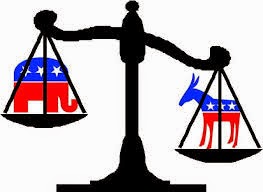
Pillsbury’s and articles of this the kind promote fear and raise the (very remote) possibility of armed conflict with China (or with some other foreign actor, such as Isis. He claims to have a lot of input from military sources on both sides of the Pacific. But perhaps he has not spent enough time looking at economic, environmental and sociological factors, and looking the two countries on a balancing scale. 

What is not addressed in Pillsbury’s article are the more compelling elements of the Chinese situation: the trade interdependency of the US and China; the fact that China has avoided any significant conflicts for more than 50 years and today stands clear of those taking place in the world; the fact that China has at least another 30 years of hard work ahead just to assure the continued sustainable growth of its country, without the cost of conflict. This is the view of Lee Kuan Yew of Singapore and many scholars. Those challenges include the environment (water, pollution, etc.), human rights, 300 million still living in poverty, raising the PPP per capita living standards of the population, finding jobs for tens of millions of new entrants annually, etc., etc., etc. For more on the US/China comparison, please see my post “What China Needs,” August 2014, and especially, “The China Threat,” May 2014.
If military strength was the only factor, consider than we spend more than $600 billion annually on defense, while China spends about $100 billion. But in addition, our economy is far stronger. Measured in PPP$ per capita, it will take many decades at current growth rates for China to even come close to our standard of living. They have unfriendly neighbors and we have oceans, friendly neighbors, and strong alliances. The balance is overwhelmingly in our favor, and China understands that. They are not about to start a war. Pillsbury may have spent too much time listening to military officials, on both sides.
I believe Pillsbury has also taken liberties in citing Henry Kissinger, as if to imply Kissinger also expects war with China. Read Kissinger’s article on the same subject cited below, written in the same year as the book Pillsbury refers to. You’ll see a thoughtful explanation of interdependency, and no indication Kissinger expects China to pick a war with the US–just a call for greater cooperation between two great countries. The title of the article is “Avoiding a US-China Cold War.”
What the author has correct is that Chinese leadership is smart.  They are too smart to sacrifice their potential for sharing in future world leadership by costly mistakes of war such as they have witnessed the US make across the last few decades. They know war could set Chinese growth back decades. They see the benefits of the cover the US provides on the global stage, while China is free to deal with its challenges and focus on sustaining an amazing job of building their economy. Contrary to Pillsbury’s recommendation, we should do nothing to undermine or weaken China. It is in our best interest to invite China to share world leadership with us.  It’s both a moral obligation for us as citizens of the world and citizens of the still leader of the world, and it is also a practical and economic necessity.

There are daily articles from the hawkish right, appealing to Americans to be concerned about a variety of foreign actors. But how many are balanced, put into context, and how many are attempts to distract us with nationalistic fervor—a tactic Vladimir Putin is using effectively to stoke his popularity in Russia? And, I dare say a tactic Republicans used to advantage in the recent election. Such distraction gives the Right more time to delay addressing partisan issues with real impact, like proposing the specifics of a better health care plan, immigration reform, equal education and infrastructure upgrades.
If you believe our greatest risks are military, e.g., Isis, Russia, or China, then you may want more money and energy spent on preparing for war. If you believe, as I do, that there is little threat to the US from these forces and that enhanced diplomacy and cooperation with Iran, Russia, and China is a better route to world peace, you may agree with Rothkopf, as I do—we have greater problems right here in our backyard.
Rothkopf explains, “…the top one-tenth of 1 percent of America’s population is about to achieve a level of wealth equivalent to that of the bottom 90 percent. That’s just over 300,000 people with holdings equal to that of some 280 million. Those wealthy few will control 22 percent of the wealth. The bottom 90 percent, everybody essentially, will also have 22 percent. This in turn means that the top 10 percent of the U.S. population will control 78 percent of America’s wealth. Almost eight out of every 10 dollars of net worth.”

What are the ramifications of this continuing progression of inequality? Why is it so serious as to trump Isis, the Ukraine, Ebola, and other foreign turmoil?
First, who can argue that foreign turmoil is entirely our problem to resolve, or that our attempts to do so will not make matters worse? And, who can really argue ISIS, Russia, or China will be in your neighborhood (militarily) anytime soon? It’s entirely ridiculous to think so. On the other hand, who can deny that our lives are seriously adversely affected by rising inequality, every day?
If you’re in the less wealthy segment of the population, you’ve probably seen the children of the wealthy going to private schools which are gateways to Ivy League universities, while your children are stuck with public schools which are losing funding year by year. Someone in your family has probably experienced one of the various effects of loss of job prospects or job security, and also the challenge of making ends meet when there is no wage increase year after year.  If you have a disadvantage (very poor family, a handicap, skin color, or other non-WASP attribute, medical problems, etc.), then you have probably found your career prospects and the social support system, continuously weakening. Most of us have seen the progression of the impact of money—e.g., gated communities, fancy cars, private jets, political influence, getting children of the wealthy into the best universities and the best clubs and jobs. This diminishes the advantage and opportunity for true merit which is not supported by money.
Michael Lewis (Flash Boys, etc.) has an article in the New Republic in which he reports on studies done in the Psychology and Sociology Departments of major institutions like UC Berkeley, Harvard, and at the New York Psychiatric Institute. Such studies seek to determine behavior differences between the wealthy and the poor. A variety of studies have shown strong correlation of wealth with selfish and un-generous behavior. E.g, drivers of very expensive cars repeatedly failed to stop for pedestrians in a crosswalk, while drivers of cheap cars stopped. Such studies led to tentative conclusions that there is something about acquiring wealth which causes many people to become more selfish and less sensitive to others.


These conclusions are a reminder that many of the wealthy may find the impact of wealth on their fulfillment in this life is not as they hope, and that supporting a more egalitarian outcome yields much greater satisfaction. There are other studies of an economic nature (see previous posts) which find that above a certain level of inequality, the motivational benefits of incentives are outweighed by the cost of inequality in slowing economic growth—yet another way in which inequality is bad for all, even the wealthy.

It is not a matter of turning a blind eye to risks from foreign actors.  Some of these are real and must be addressed. It is a matter of priorities. Do we want to put our greatest priority on the likes of weakening or fighting China, or would we like our officials to focus on how to reverse the growing inequality right here at home, now? An increase of a few percentage points in taxes on the wealthy would be a good start—let’s take half the proceeds and reduce the debt and half for schools and infrastructure. That benefits everyone. And it doesn’t even have to involve more taxes. We could redistribute what we waste—e.g., agricultural subsidies, military equipment waste, duplicate programs (e.g., consolidate 73 federal programs dealing with support for our poor).  There is enormous opportunity to reduce the cost of government, without taking it from our underprivileged.
There is another problem for US caused by inequality. Our changing life style and ideology negatively influences some of the developments in global turmoil. The USA once had a deserved global image of egalitarianism. Now, we find our democracy saddled with gridlock and partisan politics, with a rising level on inequality, which has reached the peak level of the early part of this century. Decades of improvement in the middle of the century have been destroyed. Wealth controls our politics.  Television and the internet make it clear to the world that we no longer have the best system.


Our image in Russia, Syria, China, and throughout the world, has been diminished by our intrusion in foreign wars, our partisan gridlock, and by our steady advance toward plutocracy. We are no longer an unquestioned example of why others should want democracy and capitalism—at least our version of it.  Enhanced technology (TV, social media) make our behavior highly visible to the world. Disdain and resentment enhance the campaigns of foreign actors seeking to punish us. A fairer USA, moving to restore an egalitarian democratic nation, will certainly weaken the denunciations and the vitriol of extremist foreign actors.

Inequality comes in a wide variety of forms. We see it everyday. It’s in the lack of affordable housing for unskilled workers. It’s in the proposals for raising the minimum wage. It’s at the crosswalk, at the cash register, at the kitchen table in the struggle over how to make ends meet. In my neighborhood, it’s the cleaning ladies observing the lavish lifestyle of those they serve, when they can’t even afford healthy food for their kids. Here in San Francisco, we see it in the homeless, dragging their belongings with winter approaching, while we zip by in our heated cars.
I do not argue that we are close to a revolution, but we are moving dangerously close to a plutocracy—where the government of a country is essentially ruled by the wealthy elite. We risk increasing social unrest, much greater than the Occupy movement. It has turned ugly in many other countries in recent years, and it could happen here. While we’re certainly not sure we can make a difference that’s sustainable in Iraq or Syria, we certainly can do so here, if we make this our priority.  With its many dimensions, inequality is the defining issue of our times.


References:
“China and the United States Are Preparing for War:”  
“Is Inequality a Bigger Threat than the Islamic State?”
Billionaires: Reflections on the Upper Crust by Darrell M. West (Brookings)
Extreme Wealth is Bad for Everyone—Especially the Wealthy: http://www.newrepublic.com/article/120092/billionaires-book-review-money-cant-buy-happiness

Election Results–It’s About Government

Election Resuts–It’s About Government
November 7, 2014

Huffington Post Headline. This pretty much sums it up for us Democrats. We suffered a big defeat. Congratulations to the Republicans.  Congratulations for their effective campaign. I wish all of us the best under their next two years controlling Congress, but honestly, I’m not expecting much. And I can’t sincerely congratulate Republicans for their ideology or the substance of their campaigns.

In the press conferences by McConnell, Boehner, and others, there was a frustrating litany of statements claiming “the American people have shown that:”

  • They want the Affordable Care Act (Obamacare) repealed
  • They want the Keystone pipeline
  • They do not want immigration reform
  • And, a number of other things claimed to be what the American people have shown by this election

None of these were on the ballots. The American people have in no way sent these messages to Congress and the President. I am an American. I do not favor repeal of the ACA, unless we replace it with a single payer system operated by the government, something far from the Republican wish list. If the election was a mandate against Obamacare, was the 2012 re-election of Obama a mandate for Obamacare?

And the constant theme that the American people are calling for change! “Change I intend to deliver,” says McConnell. Never mind the 30 years I have already served in Congress and didn’t manage to effect change. Exactly what change is it that you’re referring to, Mitch?

Even the President’s interpretation of the message, “get stuff done,” is not helpful. This is what both parties have been parroting, both claiming the other party is the obstacle. Reference is made to the fact that only 185 laws have been enacted by this Congress, the lowest number in decades.

But Obama has vetoed only 2 bills in 6 years. Bush vetoed 12. And, it is not true that the problem is an unusual number of bills passed by the Republican House but blocked from vote by the Democratic Senate. The Washington Post uses GovTrac data showing there have been a number of prior Congress’s with more unaddressed bills backed up. And does anyone really believe that if a few hundred bills do get approved by this new Republican Congress and the President, definite proof of “getting stuff done,” Americans will be happy?  Not necessarily.  Doubtful. It would be an insult to American intelligence and diversity to believe this would make a dent in Americans desire for “change.”  True change is going to require approval of hotly contested proposals, which is not likely. Compromise on the pipeline, foreign trade, and campus sexual assaults will not solve the problems weighing on Americans.  On the important stuff which might effect change, the parties are more divided than ever before.

So much rhetoric (“Change and Reform”), so little specificity as to exactly what is meant by those catch-all words. For example, I want serious attention to equal opportunity and inequality. Others wants the Keystone pipeline. Other voters want legalized marijuana. I favor increased taxes on the wealthy and those with high incomes, provided we use the proceeds for the improvements I favor. Many others favor reduced taxes on the wealthy. So what “change” or “reform” is the politician referring to? I resent any politician claiming to know what I want, worse yet that we all want the same thing. I want leaders with the judgment to propose specifics, with the courage to come out from behind meaningless phrases.

So, what do we, the American people, mean in terms of wanting change or for things to get better? Is there any universal message from our highly diverse electorate? One likely near universal demand is about jobs. How can that be the issue? Unemployment has declined significantly (now under 6%, down from 10% in 2008).  We have added jobs at a rate above 200,000 for a number of months now, with 2014 YTD up 17% from 2013, and 2014 representing the largest jobs increase in 15 years. The economy is growing steadily (3.1% GDP growth in 2014’s 3rd quarter, up from a low of -4.9% when Obama inherited the economy from Bush, and close to  the 3.24 average growth since 1948). That’s pretty good economic accomplishment and pretty good jobs growth.  

In fact, Obama has not been unfriendly to business. The Economist reports that the tax code expanded by 50% under Reagan and G.H.W. Bush and only 10% under Obama. Corporate non-financial taxes paid were 32% under Reagan and are only 25% under Obama. Corporate profits are at record highs.

If so much progress has been made in the economy and in jobs, why so much concern about jobs? Why did the Democrats get thrown out? A good guess is that while corporate profits are at record levels, available jobs pay less than before, new skills are needed to achieve decent pay, there has been no wage growth for the middle class and lower, and there is substantially more risk in employment in recent decades than before. Unemployment rates do not capture those who have simply given up, nor does it count those who took lower paying jobs while still hoping for better–there are lots of these nowadays. We have 50% more people in part time jobs on an “involuntary” basis–they want full time work, but can’t find it.  That’s 7 million people. There is also more risk of getting laid off or fired without protection. Plus, our ideology of equal opportunity is fading.  The wealthy are sending their kids to private schools, gateways to the most prestigious colleges, and the funding of public schools is declining. 2/3 of Americans in 2014 feel their children will be worse off than their parents. These aspects of work life and opportunity for the middle class and below did not originate under Obama. This has been growing since around 1980.

The Republicans won largely on the basis of criticizing everything about President Obama and the government, always underscored by the popular messages of reducing taxes and getting “over-reaching” government out of local and personal affairs in which they have no business. There were no specific positive proposals for what they would do differently. Republicans have done an amazingly good job of convincing many who are hurt by their policies, that their little defined policies will solve the problems–will improve the jobs situation. How? By restraining immigration? By removing regulations on businesses? By building the Keystone pipeline? If that’s it, the results will fall far short of American expectations.

It does seem that what “the American people” most want is for government to fix the jobs problem. Fixing this problem will mean increasing economic growth. That’s the one thing the right and the left can agree on. Economic growth is critical for increased jobs prospects. But that might be where it stops for the Conservatives–i.e., reducing regulation and giving companies more “flexibility” as it is called, regarding employment. Translation: Less protection for workers. That plus more foreign trade, more “open borders” for underdeveloped foreign countries–a prescription that has generally not inured to the benefit of those countries, but has benefitted big global industry.

If we can’t even agree on fiscal stimulus dedicated to our vast aging infrastructure, we won’t be able to do much to stimulate growth. With no fiscal help, the Federal Reserve has done about as much as it can. Growth is already pretty strong, and that hasn’t solved the wage and safety problems of workers. Growth alone is not enough. This period of stagnant wage growth for our workers has been the case for a long time, during cyclical periods of both stronger and weaker growth. Fixing jobs is going to involve significant and effective investment in public education and new methods of assisting with job training. And it is going to require some rebalancing of the power of industry vs. the protections and power of labor, because capitalism left uncontrolled has insufficient motivation to protect the workers–except for the “C Class” workers, of course. The median pay of S&P CEO’s is up 43% since 2009, while median household income has declined by 3%.

I think we can help reduce this “jobs” frustration with some gradual redistribution. To some extent, the protest is about inequality, which has risen to historic highs. I am personally in favor of higher taxes on the wealthy and using the revenues to pay for some of these critical needs. I have said before that I will give up my social security and my mortgage deduction if we do that in a fair and progressive way, across the board.

What should we expect of our lawmakers? I don’t expect them to read my mind or to provide only for my needs. They need to listen to all the voters who care enough to express themselves. They will certainly get a lot of conflicting requests. We’re trying to elect wise and intelligent leaders who can take all of that and use their own judgment to pursue things which are in the long term best interest of citizens–all citizens. And, we expect them to do their best to assure the effective management of government. I don’t expect to agree with all they do, but I will certainly push and vote for what I believe is the right general direction.

But I imagine at any town hall meeting these days, the major complaint has to do with jobs–good jobs, good wages, job security. Republicans claim the obstacle is government–get government out of it–the private sector will then flourish and good jobs will be plentiful.  I agree some regulations on government should be eliminated or streamlined, but I strongly disagree that the private sector left alone will solve the problem. Government has to play a strong role.

There are two problems with our government being able to provide the major fix regarding jobs. The first problem is that government is incredibly difficult to manage. The second problem is that the Conservative view of a very small government does not provide for the actions and services needed to fix the problem.

On the difficulty of government (regardless of which party is in power), consider this summary statement by George Bridgeland (Assistant to George W. Bush) and Peter Orszag (Director of the Office of Management and Budget under Barack Obama): “Based on our rough calculations, less than $1 out of every $100 of government spending is backed by even the most basic evidence that the money is being spent wisely.” They studied professional evaluations of government programs and found that the federal government — “where spending decisions are largely based on good intentions, inertia, hunches, partisan politics, and personal relationships — is not effective, compared to industry. “

There are many reasons government is hard to manage. The Brookings Institution hosted a discussion on Halloween 2014 with authors of two recent books on government–one calling for more government and the other finding fault with government. Here is the introduction Brookings provides:” In We Are Better Than This: How Government Should Spend Our Money (Oxford University Press, Oct 2014), Edward Kleinbard reframes US budget debates and finds that short-sighted decisions to starve government can be ultimately detrimental to citizens’ happiness, health, and wealth.  In Why Government Fails So Often: And How It Can Do Better (Princeton University Press, March 2014), Peter Schuck considers why the federal government is in disrepute and argues that Washington’s failures are not due to episodic problems or partisan bickering, but to structural flaws that undermine every administration.”

And, I would add that there are also structural changes underlying the jobs problem. Primarily, these are associated with advancing globalization (e.g., outsourcing), technology (e.g., robotics), and environment (e.g., moves toward clean energy). These changes impact jobs and will require new solutions

Just consider this: The House Budget Committee has identified 93 separate anti-poverty programs administered by the US Federal Government, many overlapping and terribly inefficient in the aggregate. Even as one in favor of federal government anti-poverty engagement, I would certainly join the Conservatives in wanting this melange to be substantially reduced, streamlined, re-organized, consolidated where possible. So, I’d be aggressively in favor of management change and administrative cost reduction, but probably not in favor of less budget directed to the poor.

Schuck finds these six categories of problems in democratic management of government: Elected officials goals are not consistent with those electing them–they are pushed to offer short term benefits and hide long term costs; information is hard to obtain and interpret and changes in Congress are frequent, changing the direction of government entities; officials routinely underestimate the impact of markets and the actions necessary to control them; social engineering schemes are cumbersome and officials and interest groups push them in different directions; law has been extended way too far into minutiae, making it impossible to effectively manage; then the size issue–layers of bureaucracy, poorly paid and politically appointed managers, restrictions on ability to fire and discipline, vast amounts of work contracted out with loss of control, etc. Our government reflects the world’s largest economy, our diverse population, our undertaking to protect our citizens, and to some extent to protect the world.

On the other hand, Kleinbard argues for more government. But he asks for only 2% more GDP, dedicated to such things as improved equal education opportunity. He points out that our health care system costs us 18% of GDP, while the next most expensive developed country system costs less than 10% of GDP, all being one form or another of single payer systems–operated by governments–something the conservatives do not want to see here. Obamacare is not a new health care system. It’s just a structure that has been placed on top of a private insurance system that we have had for decades. It’s just an enhancement providing for a certain amount of redistribution or protection for the elderly and unhealthy of us–folks private insurance would not otherwise insure at rates they could afford. 

Kleinbard reports that discretionary government spending (as he defines it) under Reagan amounted to 10% of GDP, whereas under Obama it has been under 4.5%, so in that sense, government spending has not increased, provided we agree that it is appropriate to measure spending as a percentage of GDP, not in absolute dollars. 


Both of these authors/scholars of government agree that Americans are misguided if they fall prey to arguments that taxes simply should be reduced. The first question Americans should ask is what services we want from our government, and then figure out whether the answer dictates more or less taxes. Some people see social security and medicare as examples of bloated government. They are really insurance programs designed to deal with the fundamentally risky nature of our lives here–and both the above authors think these are examples of good government. Some Americans have been quoted as demanding, “don’t let the government dare touch my social security or my medicare,” as if to suggest these are not government programs, but certainly suggesting they are valuable. Indeed, neither party has shown the courage to attack these. Even the Conservatives recognize that would be political suicide.

There is certainly much that should be done to improve government–programs which should be discontinued, laws and regulations that are out of date and ineffective, and entire activities government should not be involved in. Scholars of government have argued for sunsetting every government program after say 15 years–put it up for examination and a new vote. But re-engineering government is a herculean task that no President or Congress in the last 50 years has been up to.

The second problem is that Conservatives do not want government to do much more than its original role–defense and rule of law. Even health care and education are at risk to Conservative agenda. Republicans have not been courageous enough to say what they would offer to replace the ACA, but Paul Ryan has suggested a move toward private industry to handle education, through vouchers. Private industry has not been effective in dealing with issues like affordable housing. Who believes leaving civil rights to private industry will suffice? 

Conservatives have succeeded at the ballot box by continuously proposing reduced taxes, without explaining what services will be cut. Kleinbard likens this to a doctor asking an elective surgery patient, “how much pain would you like?” before asking “what benefits are you seeking to obtain from the surgery?” Without the benefit, the answer will always be, “not very much, please.”


At the root of all this are deep seated ideological differences. Are we a bunch of individuals, or are we a collective society with the willingness to look out for each other? Both views have value, both have a place. I’m just hoping for a little more of the collective recognition, given our 30 years of drift in the other direction. I don’t believe our individual fates are entirely determined by our own merits. 

For these reasons, I’m not very optimistic for the near term.  Government has to fix the problems and Republicans don’t like government. I’ll vote for any Republican who is able to find ways to effectively streamline government, remove activities we don’t need, simplify burdensome regulation, streamline the tax code, etc. But, fixing the “jobs problem” is not something private industry alone can fix–it’s going to require government intervention and investment. Government is often inefficient, but the alternative is worse. And government does not appear to be something the Republicans are prepared to engage in. 


Postscript See Brookings Inst. Article Nov 10, 2014: “Yes, the Jobless Rate Fell. Here’s Why Americans Are Still Gloomy.”
 http://www.brookings.edu/research/opinions/2014/11/07-jobless-rate-fell-wessel?utm_campaign=Brookings+Brief&utm_source=hs_email&utm_medium=email&utm_content=14835239&_hsenc=p2ANqtz-8w5GfF88Hs_OTQlcYvkZl1-mIMNpngZVzpMnEGwFbWADjBS5miJSE_8HFduYFKbS9CRFUwIKfcBwV9JTlHoYuroFhFWw&_hsmi=14835239

References:

http://www.brookings.edu/events/2014/10/31-can-we-make-government-work
history of bills unaddressed by Congress: http://www.washingtonpost.com/blogs/the-fix/wp/2014/08/08/yes-the-senate-is-ignoring-hundreds-of-bills-passed-by-the-gop-house-but-its-always-that-way/
History of bills passed by Congress: https://www.govtrack.us/congress/bills/statistics
Orzag and Bridgeland: http://lockerroom.johnlocke.org/2013/06/19/more-evidence-of-problems-linked-to-government-spending/
Berkowitz review of Schuck’s explanation of the weaknesses of government: http://www.realclearpolitics.com/articles/2014/03/25/peter_schucks_rx_for_big_governments_ills_122035.html
The economy under Obama: http://www.economist.com/news/united-states/21627659-big-business-angry-small-firms-are-even-angrier-fury-makers
Part time worker count: http://online.wsj.com/articles/post-recession-legacy-elevated-level-of-part-time-employment-1415808672

Bill Gates on Thomas Piketty

Bill Gates on Thomas Piketty
October 17, 2014

Bill Gates has written an article about Thomas Piketty’s now-famous 2013 best seller Capital in the Twenty-First Century in which Piketty argues that the rich will get richer, and that’s a problem we should solve with a wealth tax.


I can’t think of a billionaire I admire more than Bill Gates. Self made man, built a world class company, has integrity, retired early to devote his remaining life to philanthropy.  Unlike many of his billionaire cohorts, his wealth is not going primarily to Stanford or to pet issues of little rank in the world order of major problems. He’s giving primarily to address global needs in poverty, healthcare, and education. And what he’s giving is carefully monitored and professionally managed.

But I regret that I have to disagree with much of what Bill had to say about Piketty’s work. Bill says he read the 700 page book. I did also.

Here are the main critical points from the article Gates wrote (referenced below):

  • Piketty fails to differentiate between different types of wealthy people, whose behavior in the use of their wealth reflect different degrees of social utility.
  • The Forbes 400 list shows that inherited wealth is not predominant.
  • Piketty should have given equal treatment to inequality measured by consumption.
  • Instead of a tax on wealth, a progressive tax on consumption would be better.
  • Piketty should have given more credit to philanthropy.
Bill does praise the Piketty work in some ways, but his article will be read by sympathizers as mostly finding fault. That’s regrettable, because Gates has influence. 
Here’s what’s I find wrong with Gates’ interpretation of Piketty:

Social Utility: Using Gates’ example, a wealthy man who invests in a business is more valuable to the economy than a man who only spends what he has accumulated. Gates criticizes Piketty for not paying attention to this.

Let’s assume Gates wants the wealthy investor to be advantaged in our redistribution (e.g., progressive taxation). I agree that ideally we should somehow benefit differences in social utility. I’d go further than he does and distinguish different types of investors. Let’s advantage those who are investing in products and services of high social value–e.g., housing, healthy food, education, but not those in cigarettes, payday lending, alcohol, or casinos. I do understand that the latter are legal, but in my opinion, we should have the courage to distinguish. For those who are indeed creating social value (hopefully also jobs), we can charge less tax, or provide tax rebates, etc.  How about tax rebates based on jobs created? Gates criticizes Piketty’s failure to focus on social utility, but he offers no specifics on what he would do with that recognition.

The consistent argument of conservatives to reduce taxes on the wealthy is based on their belief that the wealthy will invest those savings in building businesses and thus drive the economy upward, benefitting all. If they do, we should advantage them. However, more and more do not, and we should not advantage them.

Nothing in Gates’ argument for social utility damages Piketty’s fundamental argument. Piketty would probably agree with Gates on the value of benefitting social utility in redistribution, but why does Gates present this omission as a significant flaw in Piketty’s work?  In fact, for both the wealthy investor and the wealthy spender, they are likely to have more in the future (relative to the poor), unless the spender spends too much of it. r > g is still valid.

Inheritance and the Forbes 400:  Many critics have tried to use the Forbes 400 as a basis for proof that inheritance is not a major issue–just by noting that across periods a decade apart,  many new names show up, and many old names fall off. I suppose the argument is supportive of America’s unwavering belief in the Horatio Alger story. This deep seated American ideology is at the essence of resistance to recognizing inequality and of permitting more progressive taxes. The assumption, at its extreme, is that anyone who is not successful simply has not tried hard enough.

But such a casual observation about the list of wealthy really proves nothing. This is not how good analysis is done–by leafing through the annual Forbes 400. For example, the 2013 cutoff for Fortune 400’s latest list of wealth is $1.55 billion. If someone on the list in 2004 with wealth of $2 billion, died and left his wealth to his 4 children, none of that family name would likely be on the 2014 list, but shouldn’t $500 million each, adjusted for taxes and wealth growth since 2004 still be considered monumental inheritance? See “Inside Wealth” by Robert Frank which breaks down the Forbes list to reflect who got a running start with family wealth. It seems to range between 30 and 50% of that list, depending on the type of business cycle we’re in. And, why limit the analysis to only those who have $1.55 billion? A good study of inherited wealth must go far deeper than that–it must be of the Piketty type, which took years to assemble.

Furthermore, Piketty devotes significant attention in his book to the big recent salaries and bonuses of corporate chieftans, entertainers, and athletes. He does not in any way argue that most wealth is inherited. But even if you only have time to look at that list, there are a lot of repeat names, like Gates, Walton, and Buffet. And the high salaries of some in 2013 turn into wealth if not fully consumed.

Gates, reportedly worth $64 billion in January 2013 (Bloomberg), assures us in his article that he does not intend leaving his own children a fortune, and his close friend Warren Buffet has said the same, as have some other billionaires. But, what about the Waltons and others who do not agree? And, I have not seen specificity from such minded billionaires as to exactly what they mean by “leaving little” to their children. The median net worth of the US, $87,000 in 2003, is now only $56,000. Regarding billionaires who proclaim they will leave “little” to their children, I would like to see their definition of “little.” I imagine a billionaire might feel $25 million is “little.” To the median American, $1 million is a fortune. What’s wrong with a high progressive tax on inheritance? Then we would be consistent about generational transfer, and not simply dependent on billionaire philanthropy to eliminate inheritance inequality. If Gates, Buffet, and others mean what they say about inheritance, let them advocate for high progressive inheritance taxes and/or disclose exactly what they are leaving to their children.

Finally, for more on the inequality of inheritance, please see my previous post, “Inherited Wealth, Is It a Problem?”

Consumption as a Measure of Inequality:

Experts in inequality write books on this subject. Inequality can be measured by surveys of household consumption, and the result shows how we differ in consumption. Because most wealthy do not consume as much as the poor, as a % of their income, the standard consumption measure will usually show lower inequality, and slower growth in inequality.

However, a recent study by Mark Aguiar and Mark Bils of Princeton and the University of Rochester, respectively, shows that when adjustment is made to estimate luxury purchases effectively, the rate of increase in inequality measured by consumption is approximately the same as when measured by income. There are other such studies. Even the conservative Economist acknowledges that the two measures really move in tandem.

I googled “inequality measured by consumption,” and immediately found that the American Enterprise Institute among those using language quite similar to what Gates uses to recommend this measure as better than income measured inequality–causing me to immediately question the advice Gates may be getting. AEI uses the standard approach without adjustments developed by Aguiar and Bils and others. AEI is a very conservative think tank, the kind that hates the Piketty finding, because they represent the ultra Right, those who most object to “redistribution.” Of course AEI will want to select whatever measure of inequality shows the least egregious finding. 
What type of tax would result in the most effective redistribution? 


The Economist points out that the tax choosen can exacerbate another measure of inequality over time. For example, adding a wealth tax can tend to exacerbate consumption inequality in the future, as the wealthy will consume more, to avoid the tax. A progressive consumption tax will tend to increase wealth inequality. When Gates recommends such a tax, I wonder if he has considered this.

According to my reading of Piketty, he does not advocate against any alternative types of taxes. He simply recommends the wealth tax as ideally the best at remedying the problem. That’s because wealth inequality is much higher than income inequality, and his basic argument (r > g) is that this is likely to get worse. My reading suggests Piketty is also practical, pragmatic, and recognizes the political challenges of a wealth tax. He would seem to be happy with other forms of progressive taxation with proceeds going to needs which reduce inequality over time, such as quality education for all.  But he would surely know that a progressive consumption tax would tend to increase wealth inequality over time.

Philanthropy: 

Source: National Philanthropic Trust: http://www.nptrust.org/philanthropic-resources/charitable-giving-statistics/


Gates says Piketty pays too little attention to philanthropy. Unfortunately, the inference many will draw from this criticism is to think that the nature and degree of philanthropy from the ultra-wealthy makes up for the dramatic reductions in support for the poor by the government, beginning around 1980.


I find no fault with Bill Gates’ philanthropy–it’s uniquely focused on major global problems that desperately need addressing. His is the largest foundation in the world, with $41 billion in assets, and gave out about $3.6 billion last year (2013). 

 Aggregate US household net worth, $12 trillion in 1983, $62 trillion in 2010, is now in the range of $81 trillion.  38% of the increase in wealth between 1983 and 2010 has gone to the top 1%. 


From the first chart in this section, it appears US philanthropy was about $60 billion in 1983, and was about $300 billion in 2010 (using current dollars). So, philanthropy increased by 5 fold during that time. Household wealth also increased 5 fold. But the top 1% increased its wealth by 19 trillion across that period, and in 2010 owned about 33% of all household net worth.  The top 1% of our approximately 117 million households earned an average of $717,000  last year, meaning their aggregate earnings were about $838 billion. 

Are the wealthy giving enough? It is not the case that philanthropy in general even remotely comes close to filling the gap created by government withdrawal. A recent Google/University of Indiana study found US philanthropy totals about 2% of US GDP.  No, it is not enough.

Are they giving to the most important needs? Much of philanthropy goes to universities or churches, and much more likely to go to Stanford than to Hayward State. In my neighborhood of San Francisco, private schools charge $35,000 annually for high school students, and wealthy young parents contribute generously beyond that for capital campaigns and annual operating expense campaigns. None of this philanthropy helps inequality, and little goes in scholarships to poor students. Only about 1/3 of US philanthropy is directed to the needs of the poor, so less than 1% of GDP. It is reasonable to assume that far less than that goes to the needs of foreign poor, with a few exceptions like Gates. No, it is not going to the right priority of needs.

Stated simply, the individual choices of the wealthy for charity are nice to see, help some, but they are just too personal, too disparate, too fragmented. What is needed for the major issues can only be met by more effective government programs, by society joining together to decide what is most important to the society, not by individuals doing their own thing. 


For more on this, see my previous post, “Is Philanthropy from the Wealthy Sufficient, or Would a Little More Government Help?” 


Bill Gates is a wonderful American and global citizen. I wish to take nothing away from how he has used his life and his wealth. At least he acknowledges that inequality is a problem, which many conservatives deny, and he’s willing to support a progressive tax. Yet, as he acknowledges, he is no student of inequality.

References:
Gates Article: http://www.gatesnotes.com/Books/Why-Inequality-Matters-Capital-in-21st-Century-Review
Robert Frank: http://www.cnbc.com/id/49167533

Economist acknowledgment re inequality tracked by income or consumption; and commenting on the impacts of wealth vs. consumption taxes: http://www.economist.com/blogs/freeexchange/2014/07/measuring-inequality
US median net worth: http://www.nytimes.com/2014/07/27/business/the-typical-household-now-worth-a-third-less.html?_r=0
Bloomberg, Bill Gates’ net worth: http://politicalcalculations.blogspot.com/2013/01/the-distribution-of-net-worth-in-united.html#.VEU2tildXOc
Census Bureau table of US household Net Worth over time: https://www.census.gov/compendia/statab/2007/income_expenditures_wealth/wealth.html
2014 US household net worth: http://www.csmonitor.com/Business/new-economy/2014/0918/Household-net-worth-in-the-US-hits-a-new-record-but-the-wealthy-reap-the-benefits