The Impending Clash

collision

December 21, 2015

There are two major opposing global forces which are developing strength, increasing the probability of an impending clash.  The forces are strong in our homeland, but they are not unique to us. These forces are gathering strength in Europe, Asia, and elsewhere.

On the one side is unrestrained capitalism, which is behaving largely just as we should expect, according to its nature. On the other side is justice–economic, social, and environmental. At the moment, capitalism is by far the stronger force, but justice is advancing. 20 years ago the forces of justice were not so apparent, but then, capitalism was not as strong then. It is increasingly clear that unfettered capitalism is widening the chasm between it and justice, but as it does so, the strengthening of capitalism around the world has given birth to a steadily growing demand for more justice.

What is the evidence? One the one side, corporate profits, unimaginable wealth of the 10%, 1% and .1%. Free and freer trade, globalization, products for the masses from the ends of the globe at bargain prices Americans could not have imagined, and technological advances which benefit even those of the lowest income.  All of this seems good. There are vast benefits to capitalism, and these serve to distract from the problems unrestrained capitalism brings. And, of course, many of us hold to the illusion that yet I too can be among that 1%–so best not to tinker with pure capitalism, lest changes inhibit my own opportunity for attainment of vast wealth.

On the other side, inequality has risen to peak levels, 15 % of Americans (45 million) still live in poverty, critical workers at the lower levels are being squeezed out of San Francisco by rising home prices and rents, the smog is thick over Beijing, privileged kids increasingly go to expensive private schools with assured spots at Ivy League Universities followed by guaranteed careers, while the masses are left with public education which is starved for funds, and many young men of color have trouble finding any job. While cheap goods from abroad abound, there is little help for those who lose their jobs to foreign competitors. Most of the world has a smart phone, but the financial benefits of the technological explosion are going to the capitalists who own and create.

And, it does appear that people across the globe who do not have the opportunity of developed nations, even those minorities who live in developed nations and cannot break the barriers to opportunity, are increasingly disillusioned with today’s form of capitalism. Many of these have developed a bitterness and hatred of the privileged who have pulled up their ladders. And some of them have taken up arms against us, both abroad and in our homeland.

What can we say to Liberals who are angry at capitalists? That capitalism is certainly the best economic system known to the world throughout history. That the basic tenets of capitalism are free markets, government primarily to protect private interests and (in some countries) to assure competition, but mostly to make a profit–without any limits on the amount of profit. There is no element of concern for the environment in pure capitalism, no concern for the wages of employees. Basically, we Liberals just need to acknowledge that nowhere in the spirit of pure capitalism is there expectation that the profit motive be subjected to parallel tests of economic, social, or environmental justice.

At the same time, we Liberals need to acknowledge that there are a number of capitalists who do undertake to include some elements of justice in their agenda. Across the last 20 years, we have even seen evidence of attention to certain elements of justice by the likes of Walmart, Coca-Cola, Nestle, and BASF. There are 1,498 companies which have qualified as “B Corp” companies, by demonstrating a broad commitment to justice in their activities.  We cannot know whether such commitments to justice by capitalists are driven by growing awareness that their consumers respond favorably and buy more from those who do, whether they find better motivated employees by doing good, or whether the owners have a heartfelt commitment. My opinion is that it doesn’t matter. All of it is good. The slowly growing number of these corporations gives strength to the developing justice force.

What can we say to Conservatives who are angry with Liberals for trying to restrain Capitalism by introducing minimum wage laws, mandatory health coverage, and equal pay for women, as well as trying to force conversion from fossil fuels to clean energy? We can say that we all continue to support capitalism as the best economic system. We only differ in feeling strongly that it is the role of government to assure that capitalism is fair and just in its impact on people and on the environment. It is ridiculous for Liberals to expect capitalism to monitor and control itself in the pursuit of justice.

Most conservatives might even agree that government must assure that capitalism is fair. But it seems the agreement ends there. The conflict rises immediately upon a specific case being introduced. Take minimum wages as an example. Liberals argue that it’s crucial to get valuable workers out of poverty, and with a little more money they will spend more, which helps capitalists too. Conservatives argue that businesses will close because they cannot afford to operate with higher wage requirements and therefore, there will be fewer jobs available–hurting workers and the economy. Who is right?

Take fossil fuel controls as another example. Liberals argue they’re destroying the temperature and the climate, risking our planet. Conservatives argue that this science is not so sure and that we need fossil fuels for a few more decades for the jobs they provide and for the cheap energy which fuels our economy. Who is right?

The movement of the forces of capitalism and justice portend an impending clash. But these do not represent radically different ideologies, with only one to survive.  Regrettably, we do talk about it that way in our divisive and extremist political rhetoric. But it is not a case of right or wrong, good or evil. Unrestrained capitalism can clearly harm society and the planet. But liberal values taken to an extreme, can damage motivation, opportunity, and weaken the economy so that life would be less satisfying and rewarding. There are examples in global history.

A compromise, a balancing, would be the better solution. But, this does not seem likely. Capitalism does not yield without a fight, and seems to have a very strong constituency, even among our blue collar workers.

One of my esteemed professors in London in 2012 said history has shown the only way inequality is remedied and social justice is achieved when confronted by unrestrained capitalism, is through revolution. He argued that revolution is necessary and is a good thing. It re-orders the priorities to better suit the common good.

But who wants to live through it, or for their children to suffer that? Can the impending collision be avoided…or, will there be blood? Must we suffer a catastrophic collision of these forces?

blood

Thanksgiving Thanks

November 26, 2015

It’s Thanksgiving. I’m taking a moment to express gratitude to our President for so tirelessly working to keep us out of foreign wars.

Overall, his foreign policy can be described as a policy of avoiding conflict as long as possible, emphasizing negotiation, and seeking to engage international support when aggression is necessary. Of course, this policy will necessarily involve delays in getting into the conflict, and likely slower and more limited engagement of the enemy.

It has resulted in a litany of criticisms from the Right. First among the list is that Obama’s foreign policy is described as “leading from behind,” or not leading at all. It is also described as too little too late, resulting in the enemy gaining strength. These criticisms apply most clearly to his policy in the current conflict with ISIS in Iraq and Syria. Critics think he should not have pulled troops out of Iraq when he did. But, strangely, he is also criticized by some for getting us deeper into the war which he did not initiate in Afghanistan with his “surge there.”

In this dynamic and unpredictable age, no leader can direct foreign policy with zero error, especially when viewed with the benefit of hindsight. But I think our President’s policy has been far better for us than the alternative.

“The US is not leading” comes the cry from every Republican presidential candidate. I ask just why we need to be the “leader” in everything globally?  It should be widely recognized that unilateral power for the US peaked in 1989 with the fall of the Soviet Union. Three years later, Francis Fukuyama declared that this was the end of history and the triumph of liberal democracy.

But US relative power has been declining steadily since,  due to  (1) our failed foreign wars and domestic political and economic problems and (2) due to globalization, technology, and the inevitable rise of other nations across the last 30 years. It is not realistic or appropriate for the US to try to be the single leader of the world any longer. Others have rights and obligations and have the power to contribute. It’s too easy for Hawks to say we fail our allies. It is a multi-polar world now and our allies fail us if they don’t step up.

I ask whether our “leadership” in global aggression has historically been successful? Our leadership with aggression has not resulted in success under the direction of any of our Presidents across the last 50 years, with the possibly only exception of the Gulf War. President Bush and his Republican advisors made a massive mistake in invading Iraq. President Obama has certainly not succeeded in trying to resolve conflict he inherited in either Iraq or Afghanistan. In neither of these cases, nor in Vietnam, can the US proudly declare its aggression has resulted in the creation of a peaceful democratic government.

I ask whether our “leadership” in the form of global aggression has really improved our image as global leader?  I think not. We are widely seen as interfering, bullying, arrogant. Our aggression has benefitted the recruitment of opposing forces and that of terrorists, and has weakened our image, especially throughout the Middle East. Perhaps one reason the world’s second strongest power (China) has chosen to avoid aggression across the 30 years of its steady ascension to world power is their wisdom to observe the costs of our failed aggression globally.

Hawks argue that, somehow, more force, more aggression, or some implied magical improvement in our military strategy (undefined) would have resolved these wars. There isn’t much definition as to “how” this would be accomplished, except for oft mentioned insistence that Obama’s troop withdrawal from Iraq was the key (without mentioning who got us into this war, or course). More “advisors” on the ground are demanded. More “boots on the ground” are required, but no one seems courageous enough to say those boots should be American.

Such arguments fail to recognize the deep local animosities that can only be ultimately resolved locally–ethnic and religious differences demanding respect, equality, political representation, new borders, etc. But the President reports that he and all his military and defense leaders unanimously agree on his strategy. What would the critics say–that these particular Generals are not the right ones?

Of course our President and most all of us who support his policy recognize that there are times when conflict is unavoidable, as presently in Syria and when dealing with global terrorists.

Contrary to all the critics, I feel it is a safer US and a safer world under Obama’s foreign policy than under that of his predecessor. And I fear for our safety if the Hawks among the Republican candidates should make it to the White House. If we are going to spend more money, let’s not do it in military where our spending is already equal to the next seven nations combined. Rather, to display our leadership in improving the world, let’s provide humanitarian assistance and home to refugees and work to improve opportunity in other parts of the world. War seems to only beget more war.

President Obama, thanks for your steady resolve in fighting for peace when faced by global conflicts we cannot and should not solve and when you are surrounded by critics.


Immigration–Is My Child More Important than the 99?

Unknown

November 17, 2015

Immigration is a white hot topic in the aftermath of terrorist killings in Paris last week.

There is a massive surge of people from war torn and impoverished countries. Economists call this the migration from the Global South to the Global North. It has been happening for centuries, but it’s growing. It’s inexorable. If we don’t find ways to rapidly improve our screening, and also to accept some risk and expand our capacity, we are simply inviting more illegal pressure at the borders of developed countries, and more outrage by those rejected. More terrorism.

The UN Refugee Agency reports that at the end of 2014, the number of people forcibly displaced had reached 59.5 Million.  4.3 Million of those are registered Syrian refugees, according to the UN. Following the horrendous attacks on civilians in Paris this week, Donald Trump and Ben Carson said they would take none of the refugees. Hilary Clinton says she would take 65,000 and President Obama says he would take 100,000 in 2016. 25 Republican Governors say they will take none. Other European countries will likely join in resisting. One exception–Germany will not refuse Syrian refugees and may take up to 1 million.

And refugees are only a fraction of the entire immigration challenge. Gallup estimates that there are 640 Million adults who want to emigrate. Adding their dependent elders and children, the number of those who want to change countries exceeds 1 Billion globally. It’s not only the refugees who come from horrible circumstances. Many of the remainder desiring emigration live in absolute poverty, where there is almost no opportunity.

We need to ask ourselves a few questions about immigration, but let’s first simplify the considerations, with three exclusions: Let’s exclude the matter of illegal immigrants, and talk only here about legal applicants. Let’s agree all countries should be allowed to use a universally agreed method of screening out criminals and dangerous people, such as terrorists and drug dealers. Finally, let’s agree that citizens of a country have a right to control the volume of immigrants year to year such as to be able to accommodate the needs of the new citizens without overwhelming local and federal governments. People at either extreme will agree on these three needs.

These assumptions help to eliminate the peripheral noise which allows some of us to hide behind excuses, or for our politicians to take politically expedient positions. These assumptions reflect legitimate concerns which must be addressed, but many people hide fundamental negative biases behind these assumptions. For example, some find it easy to say we can’t allow immigrants because they bring danger to us, when underneath that excuse is a deeper resistance to immigrants.

Among the negative biases are these:

  • A belief that immigrants are only a cost to our economy.
  • A belief that immigrants only steal jobs we need and drive US wages down.
  • A belief that people of certain ethnicities or regions will bring culture that will damage our way of life.
  • A desire to just keep things the way they are.

But in fact, Brookings analysis finds that in most cases immigrants to the US at first take jobs most Americans do not want and they ultimately cause the wages of American workers to rise. Brookings finds that taxes paid by immigrants exceed the cost of government services they use. Fewer immigrants are put in jail or prison than American citizens, in percentage terms. They start more businesses and file more patents than do Americans. And, as to culture, who doesn’t enjoy dining at the variety of ethnic restaurants they bring to our neighborhoods?

Yet, many Republicans want to pull up the ladder, seemingly because one Syrian terrorist got past the screening to become part of last week’s massacre in Paris.

To my thinking, ALL of the US offers are woefully short of our obligation and our capacity. Note that in my assumptions above regarding capacity, I said, “such as to be able to accommodate the needs of the new citizens.” I did not say, “such as to avoid any possible risk or any inconvenience or discomfort of host country citizens.” If we are to hide behind the risk that out of 100 immigrants, even one terrorist might get in, we are choosing to turn our back on the 99. And some of the 99 denied asylum will certainly die, and others are suffering lives more desperate than we can imagine.

We accept some risk in all other aspects of our lives–even driving or flying. Republicans risk our health with greenhouse gas pollution and they risk our lives in foreign wars, but zero risk tolerance is taken with immigrants? We cannot justify zero tolerance in this global crisis.

In other words, may I hold that the safety of my child is more important than the safety of the child of one of the 99? Even worse, may I hold that the safety of my child is more important than all the children of all the 99?

If so, we are saying that the protection of Americans is more important than any amount of pain, suffering, and death among those of other countries. And, we are saying there is no consideration we must make about immigration, other than our own internal safety. We are saying we don’t care about the lives of those who live outside our borders.

I ask whether the immigration disagreement is only about how to deal with illegals, how to screen for dangerous applicants, and how to determine how many people we can serve. Or, is it perhaps also about resistance to helping others, fear of the unknown (people who are different), and unwillingness to share and to help? Are we just plain selfish?

What do we need to do?

There are critical core convictions we must come to before we can move forward.:

1-That we are not just citizens of our own country. We are citizens of the world, and we must strive to have equal concern for those in other countries who suffer.  Let’s remember that many of the first immigrants to the US were bringing religious preferences unacceptable in England, and others were carrying criminal records resulting from poverty. And yet, these became the foundation of the world’s greatest nation.

2-That we cannot be oblivious to the poverty, inequality, and lack of opportunity which exists in  many parts of the world, and which motivates terrorism. If we find ways to share our opportunity and extend it to other parts of the globe, many of those 1 Billion will prefer to stay in the countries of their birth culture.

If we could only agree on such core convictions, we would be in a position to begin to work out the methodology to satisfy the assumptions above.

We have an opportunity to respond to this advancing global development and determine the nature of the world in which our children will live. Or, we can do nothing and leave this huge problem to its own evolution. And that looks ominous for all.

Which do you feel:

A. Citizens of democratic governments have an inalienable right to decide who can come to live in their country, how many, and even that no-one new can be admitted.

B. Citizens of the world have an inalienable right to move to where they want to live, and the receiving country has an obligation to try receive as many as they can, so long as they come legally and are reasonably screened to prevent dangerous entrants.

I vote for B. I’ll be happy to see Syrians and others living in my neighborhood! I will be happy to have some of my tax dollars go to help to resettle these good people, and I feel confident they will return the investment by their gratitude, hard work, and taxes paid in our country.  I cannot understand how Presidential candidates professing deep religious convictions can say we will accept none (e.g., Carson, Cruz, and others). Where did Jesus or any of the prophets of great religions say we should only care for our  own?

I love my children and I want them kept safe, but I cannot say that the perfect safety of my children is more important than the safety of the children of millions of good fathers who live elsewhere. I’m willing to stretch myself to understand others’ cultures. It will be good for me–it has been good for Americans across time since our first immigrants, and will be in the future, if we embrace the opportunity.

What’s happened to us?

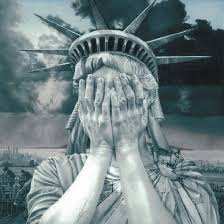
Give me your tired, your poor, Your huddled masses yearning to breathe free, The wretched refuse of your teeming shore. Send these, the homeless, tempest-tossed to me, I lift my lamp beside the golden door!

images

Is China a Threat to the US?

October 9, 2015

What kinds of Chinese threats are of concern to Americans–military, economic, or “soft power,” the latter meaning global political and ideological influence?

If it’s all about global power, Zbigniew Brzezinski said a global power must have cutting edge superiority in “[…] global military capability, international financial and economic influence, a clear-cut technological lead, and an appealing social lifestyle—all of which must combine to create worldwide political clout” (Brzezinski, The Geostrategic Triad, 2000). While the US no longer has the unipolar superiority across all categories that it enjoyed in the 90s, it is still the strongest nation in all dimensions, when all is considered–and by a wide margin.

Yet, our relative advantage is slowly diminishing. Should this be a concern to Americans?

Is China a military threat?

Measured in spending terms, US military spending is as much as the next 7 nations combined:

0053_defense-comparison-crop

If budget isn’t enough to make the case that the US is now and for a good period of years likely to be the strongest military power, consider these additional points:

  • No other military has shown greater success in military engagements.
  • We have friendly nations on two borders, and oceans on the other two. China and Russia have on their borders many unfriendly nations with which they have major disagreements and occasional military engagements..
  • We have most of the developed world as allies. Five of the next 7 in military power are our allies.Others have few.

Is China an economic threat?

There is a similar story in economic power. In nominal terms, the US is well ahead of China. In purchasing power parity (reflecting the lower cost of goods and services in China), China now equals the US in GDP.

gdp-nominal-ranking.jpggdp-ppp-ranking.jpgSource: StatisticsTimes.com

However, GDP per capita is another story, and is critically important. China has 1.3 billion people and we have 320 million. US per capital GDP in Purchasing Power Parity terms is $53,000 (7th in the world), and China is at $13,000. This is important, because China has such a long way to go in bringing it’s people to equivalent levels of income and standard of living. They must focus most of their resources on raising the standard of living for their people, which means less on military and everything else.And China has many other issues to address, all costing money, including water, pollution, human rights, rule of law, and others. In 2050, China is expected to well exceed the US in GDP, but it will still lag far behind in GDP per capita. Goldman Sachs forecasts the US at about $85,000 in 2050 and China at about $45,000.  We are at 5X their per capita income now and will likely still be around 2X in 2050. Many more decades will likely be required for China to achieve GDP per capita equal to the US.

The US has a stronger rule of law than China, and is likely to continue to hold the reserve currency of the world for a considerable period of time. This results in a much lower cost of credit to Americans because foreign demand for our securities drive the price up and the rates down. China is benefitting the US by being the largest international buyer of our government securities.

And, as to Brzezinski’s “clear cut technological lead” requirement to be a global power, there can be no dispute. The Economist summarizes: “…in some domains America’s clout is increasing. The country has demonstrated an astonishing capacity to dominate each new generation of technology. It is now presiding over a new era based on the cloud, e-commerce, social media and the sharing economy.” (Economist Oct 3, 2015)

But the China “threat” most identified by Americans is indeed an economic threat–that low Chinese wages and Chinese government support to their companies results in jobs moving to China. This is true. Many jobs have moved to China. US jobs have also moved to Mexico, to Bangladesh, and many other low cost wage countries. But production in China is not some kind of Chinese attempt to hurt us. It’s not a conspiracy. In fact, we caused it, by being the major nation pushing for open global borders and unrestricted free trade. Americans benefit by paying $29 for a shirt which often costs $50-75 when manufactured at US wage levels. And our stock market and personal wealth increases due to Apple being allowed to sell its iPhone in China. It seems many protesting Americans forget the savings and wealth generation they have enjoyed at Walmart (which fills most of its inventory from abroad), in the stock market, and many other ways.

We can’t have it both ways. If we want the benefits of globalization, we have to accept the costs and risks. There are indeed a lot of plusses and minuses on both sides of this ledger. Since the pressures for advancing globalization do not seem reversible, we must focus on what our country can do to help those losing jobs to foreign competitors, rather than complaining about those countries hurting us. Let’s work to get displaced American workers re-trained and back in our services work force.

Is China a threat in “soft power”–global influence?

In his 2012 book, Zbiegniew Brzezinski ranked countries in terms of soft power:

Untitled

Soft power is all about our influence, how we are seen by the citizens and leaders of the other nations of the world. As with military and economic power, we are also far ahead of China in soft power.

However, failed wars and the US triggered world economic crisis of 2008 have weakened how we are seen globally. And, there are other considerations that are damaging how we are seen:

  • Our political structure is not working. Congress is in gridlock.
  • Inequality has risen to equal that of the 1920s Robber Baron Era.
  • Middle class wages have been stagnant for decades.
  • Our 1% seem to be increasingly controlling our political process.
  • We are pulling up the ladder, abandoning our historic roots, and can no longer honorably say, “Send these, the homeless, tempest-tossed to me, I lift my lamp beside the golden door.”
  • Our foreign policy and our trade policy revolve around what’s best for the US only.
  • We are seen as interfering and failing to provide solutions to the humanitarian woes of the world.
  • The leading contenders in our Presidential Campaign, Donald Trump and Ben Carson (and others) are totally embarrassing to anyone concerned with the real issues and who understands the reality of running our government. The Republican Party is a laughingstock globally. For example, with 1.6 Billion Muslims in the world, and Pew Research forecasting the Muslim population exceeding the Christian population by 2050, how can we be seen as world leaders, with people like Trump and Carson leading our polls?

Our advantage is weakening fastest in soft power. We need to show we care for the middle class and the poor in our own country, reduce violence, reduce discrimination, get our governance process in order, and demonstrate a concern for the rest of the world–not just militarily.

Summary

We can no longer try to lead the world alone, and that’s a good thing. We can sustain for some time as world leader, as it relates to our military and economic power. But,we are too focused on what’s good for the US only–in terms of immigration, foreign affairs and conflicts, trade negotiations and much more–and not sufficiently focused on what is best for the rest of the world. There is significant opportunity for improvement for  the US in all these areas.

But equally important is a reality now beyond our control. In 1990, our GDP was 16 times that of China, and now we are equal. In 1990 China had no discernible military budget, and now has 1/3 that of the US. And other nations are rapidly advancing. We can’t have maximum advantage of globalized free trade for US companies without accepting this reality and sharing world leadership, also recognizing we have obligations to care for the welfare of those who make our products and buy our securities in China, in Mexico, in Bangladesh.

I know something about China. I have been there many times, lived there for a year, managed a business there, and have studied China with continued great interest. I find the Chinese people friendly, generous, hard working, innovative, smart, and with excellent values.

China is the nation which brought us paper, the stirrup, the blast furnace, the compass, and much more. China’s government has done a better job than ours in many respects, across the last 30 years, notwithstanding its flaws. Poverty there has been reduced from 65% of the population to less than 10%. Chinese Tu Youyou just won the Nobel Price in medicine largely based on her research into ancient Chinese medicine cures for malaria. We have so much to gain from China.

China is nowhere near being  equal to the US militarily, or matching our economic power, when all is considered. Neither is China a threat to our well being or our lifestyle. I argue China is in fact a benefit to our security in the world and to our lifestyle.

With large part due to globalization which we advocate, we are moving from a unipolar world to a multi-polar world, and the next stage is likely to be primarily the US and China as key leaders, with other nations involved at slightly lesser levels. China does not want a quarrel with the US. China understands how important we are to them, and only wants to take an appropriate role at the world leadership table. We should welcome them.

The only way China can be viewed as a threat to the US would be for us to seek to jealously guard our role as unipolar world leader and work to prevent any other advancing nation from advancing and sharing in world leadership.There are some Americans who seem to want that. That is not a good plan, considering how the world is changing, largely at our behest.

Our future role will be determined by the advance of other nations, by our own behavior over the coming years, and by our willingness to welcome other advancing nations.

Only Fools Rush In

October 2, 2015

Unknown

Lest anyone be unsure, I am a great admirer of Barack Obama. One of my strongest (but by no means only) reasons for admiring and respecting him, is that he has done his best to keep us out of war, not any easy task, given the hawkish Republicans he must contend with.

If you listened today to our President’s public statements about the war in Syria, it seems to me impossible to disagree with his thoughtful and thorough explanation of the issues, the complications, and our best approach to the ultimate resolution of the conflict there. Yet, most certainly, many Republicans will disagree.

We’ve lost American lives in Vietnam, in Iraq, in Afghanistan, and elsewhere, and now we have an opportunity to lose more American lives in Syria. Hawkish Conservatives like John McCain and Lindsay Graham want a much more aggressive military engagement in Syria, using the recent advances by Russia as a lever to incite Americans. Graham is perhaps at the extreme, willing to use US troops on the ground there. Others like McCain want something more aggressive, but are unwilling or unable to specify just what that is. Perhaps they are constrained by awareness that the American people remain war weary and unwilling to provide support for deeper military engagement abroad.

Conservative Hawks place the blame for the Middle East war on President Obama. He’s responsible, they say, because he withdraws American troops too soon. Never mentioned is that George Bush took us into Iraq in the beginning, spending Billions and costing us thousands of American lives. Never mind that there were no weapons of mass destruction. Had we not rushed in, maybe we would have learned without taking the wrong action.

Never mentioned is the reality that there are local ethnic and religious differences that are the essence of the Middle East conflicts. Also, there are frustrations resulting from borders drawn by colonial powers, and there are bodies of cultural likes who want their own nations.

Conservatives do not ask, “what do we know about the unique issues in foreign lands, and what right do we have to interfere?”

Conservatives need to be reminded that we have spent Trillions of dollars in foreign wars:

Untitled5

Untitled6

Source: http://cironline.org/sites/default/files/legacy/files/June2010CRScostofuswars.pdf

Conservatives do not want to be reminded how many American lives have been lost in foreign wars:

Untitled8

Source: http://www.militaryfactory.com/american_war_deaths.asp

And yet, I do not know of any of those Conservatives who think we won any of those wars, or even that the outcome was even modestly positive. It’s always easy to say that’s only because someone on the Left in Leadership later didn’t follow up correctly.

Conservatives do not want to acknowledge the casualties of innocent locals when we intervene. Even our best attempts to conduct war carefully can fail with disastrous consequences. (Fast forward to October 3 and we learn that a mistaken US airstrike may have killed 19 people at a Doctors Without Borders hospital in Kabul). There are international conventions for war, to which the US subscribes, and rightfully so. These deny the indiscriminate use of weapons. Thus, some hawks fail to accept that moral considerations do not permit fast and total destruction as a means to solve the conflict. Slow and careful combat in foreign lands goes on forever and locals always have the advantage. How many such wars must we wage to see that we simply cannot win foreign wars? If we had any history of success in winning foreign wars (since WWII), I might be moved to consider our engagement. But we don’t. For the most part, we simply make things worse–for the locals and also for ourselves.

And even if we have some success, it is limited, and we have no ability to assure that the replacement government will be better, will be good, and will sustain. We have failed there as well.

On top of all this, it is indisputably true that our interference, our killings in foreign fields, our arrogance to assert that only we know what is best for the people in Kabul, in Kobane, in Falluja, has resulted in increased anger, vengeance, and terrorism in the US.

It’s not that we should turn a blind eye to massive human rights violations. President Obama is not doing that, does not recommend that. We are in constant discussions with our vast set of allies. We involve world governance organizations. We provide air strikes on ISIS. We support the moderate opposition parties. We provide humanitarian assistance. We continue sanctions against Russia due to their actions in the Ukraine.

Engagement in foreign wars must be a last resort. We must negotiate, and we must galvanize global support. We must use all measures before we engage militarily. And I believe deeply that our President’s consistent attempts to show respect to foreign leaders, even those with whom he disagrees so strongly, is far more effective in the long run than the belligerent rhetoric coming from the right. Obama “invites” President Putin to join in effective destruction of ISIS, and presents a hope to see Russia return to greatness and share in world leadership.

All the above considerations must be carefully considered before we choose to engage in foreign wars or intervene to protect human rights. The reality is that our intervention usually costs far more in dollars, lives (US and foreign), and the result is usually a failure to resolve, followed by protracted conflict and increased terrorism. War has profound and lasting implications.

What our President rightfully said today, is that the Syrian war will never be won by foreign powers. Resolution will require the concerted action of local peoples who hold the grievances leading to the war. Organized support from global powers can help, but cannot win the war. Russia’s actions may seem bold to the uneducated, but Russia only has Iran and Syria as allies, while most of the rest of the Western world are our allies. Russia’s economy is experiencing a -4% GDP decline, while ours if the strongest in the world. Russia is headed toward alienating the Sunni Muslims of the world, while Russia  itself has a large Muslim population. Not very smart.

Let’s wait. Russia also has a list of failed foreign wars. This is going to be another of them if they continue.

If the Conservatives seek a bold way for the US to help more, some meaningful “action,” to “do something,” then let’s match Germany in willingness to take and resettle Syrian refugees. They’re taking 800,000. We are taking 100,000–not this year, but next year…and only maybe.

Taking the Syrian refugees would be a far lesser investment than waging war there, and over time, it would pay dividends. No lives would be lost, and many, many would be saved. What could be a better response than this?

Norquist, Trump and the Plight of our Middle Class and Poor

September 28, 2015

 Untitled

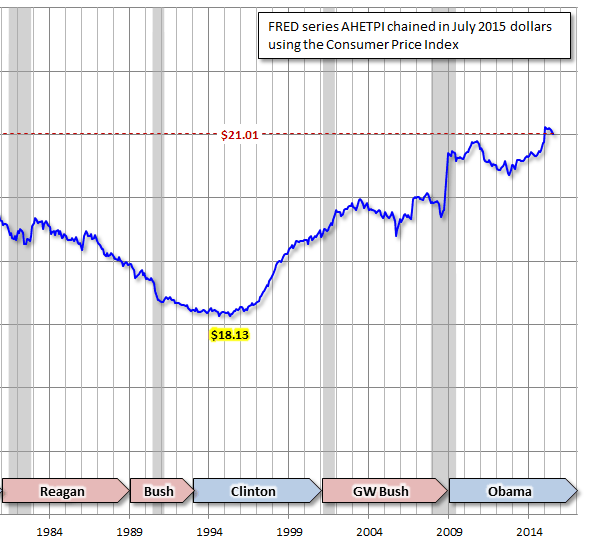
real wages since reagan

This data is from Adviser Perspectives, advisers to wealth managers. The data is verifiable through many other sources.

Wealth Advisers explains: “Note that this is a gross income number that doesn’t include any tax withholding or other deductions. Disposable income would be noticeably lower. Latest Hypothetical Annual Earnings: $35,402, Down 14.6% from 42 Years Ago…That’s a 14.6% decline from the similarly calculated real peak in October 1972. In the charts above, we’ve highlighted the presidencies during this timeframe…. We will point out that the so-called supply-side economics popularized during the Reagan administration (aka “trickle-down” economics), wasn’t very friendly to production and nonsupervisory employees.”

This very day, September 28, 2015, Don Lemon of CNN interviewed Trump’s business advisor and also the infamous Grover Norquist, whose claim to fame is that he extracted from everyone on the Conservative side of our political spectrum, a pledge not to increase taxes–ever, for any reason! It’s in writing. They all signed it.

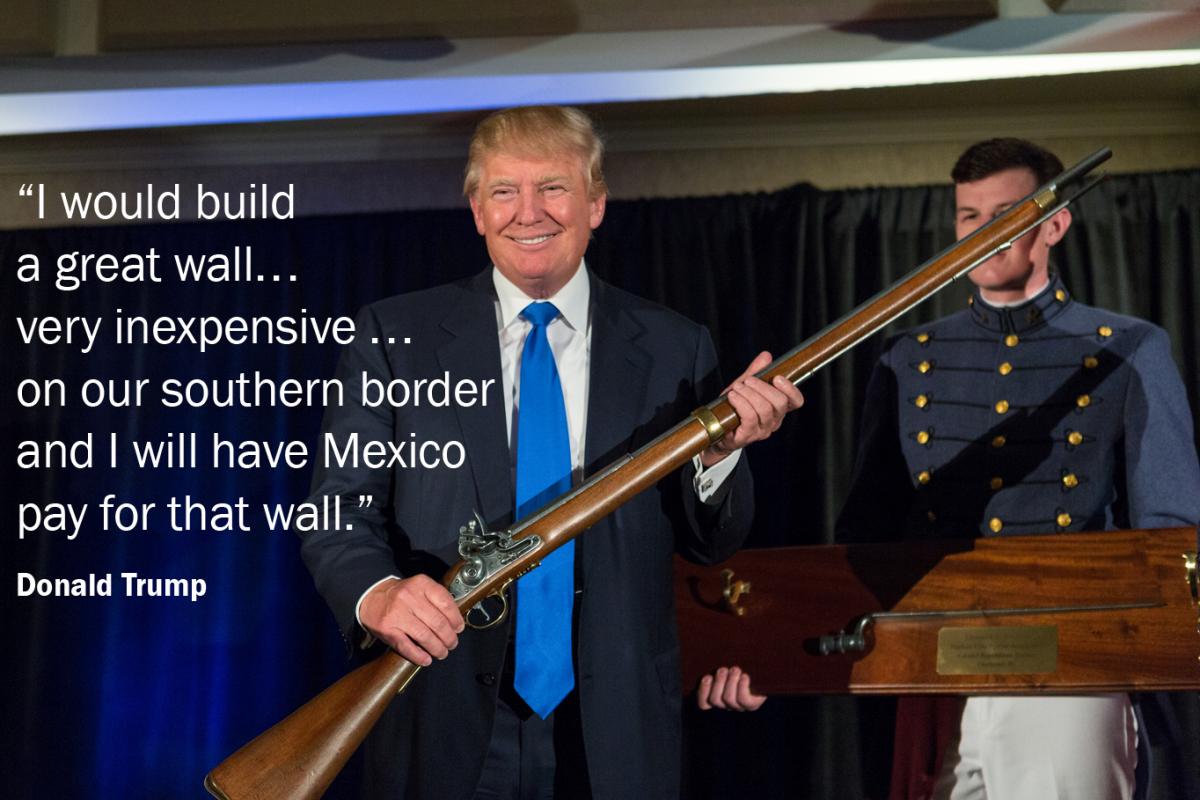
Erin Burnett interviewed Trump today. His new tax plan proposes to reduce taxes on everyone, including the wealthy. He suggests he will punish only hedge fund managers, but examination suggests that even they will see net tax decrease. Of course, tax reductions for the middle class and the poor are welcome. But…how is the resultant shortfall in government revenue going to be made up? How is he going to pay for his Wall, and for his expanded military?

All three on the Trump/Conservative side interviewed, essentially reverted to the old adage–that tax reductions will increase economic growth, and that economic growth will “trickle down” to all, including the middle class and the poor.

There are only two problems with all this:

(1) It’s not evident that cutting taxes will automatically increase growth. Essentially, when my taxes are reduced, I don’t necessarily invest the savings in new productive capacity for the economy. That’s the faulty claim. And, I don’t even necessarily spend it to buy goods of production or services. That might increase demand. I might just save it by buying a new home, a new boat, some stocks, or a larger savings account, etc. This is especially true when effective tax rates on corporations and the wealthy (loopholes included) are already low and there already exists sufficient motivation for all to invest.

(2) And, even if there is improved economic growth, it does NOT automatically translate to well being for the middle class and the poor. Under Reagan, the icon of Conservatives, economic growth was indeed strong (by US standards), during the last 6 of his 8 years, averaging 3.8%. There was job growth. However, there was NOT wage growth. Take another look at the chart at the beginning of this post. Note that real wages declined under Reagan, notwithstanding the improved GDP growth. One obvious proof that economic growth does not necessarily improve the plight of the middle class and poor can be found by a quick look at China’s recent history. Across the last 35 years, China has enjoyed economic growth of about 10%. During this time, the Gini index (primary measure of inequality) has steadily risen to peak levels, equal to that of the US (below). The benefits of that growth have largely gone to the wealthy. Same is true in the US.

Regrettably, under both Republican and Democratic administrations since 1972, wage growth has been stagnant. Worse–it’s been down.

The Conservative policies initiated under Reagan have steadily expanded across the 40 years since, under both administrations. The result of those policies have been very good to the top 10%.

chart-01

Source: New Yorker

But, it hasn’t been very good for workers.

In summary, reduced taxes does not automatically increase economic growth–and, economic growth does not necessarily result in improved life style for the middle class. Growth is necessary, but not sufficient.

Very simply, capitalism is the best economic system, but left to itself, its natural evolution is to excess, without much concern for the workers. Government engagement in the process, control of the excesses, with protections for the underprivileged is necessary.

And, without that, even the wealthy will someday pay a high price.

Trump and the Failures of Government

donald-trump

While I never wanted Donald Trump to be elected (he’s not competent to lead our country), for a moment in time, I saw something encouraging about his popular support. That was a faint hope that the American electorate might really push for dramatic change in government.

Both parties are responsible for the failure of our government. Here’s my top 10 list of the major failures of our government and our leaders, and therefore, what I am looking for in policy prescriptions from the candidates in both parties:

  1. Failure to reach agreement to do much of anything consequential. To be a leading nation takes courageous action, and we haven’t had much in a long time. We’ve been gridlocked in partisan acrimony.
  2. Failure to recognize and address (with policy) the Conservative agenda since Reagan which has pushed us too far to the Right, to the point of returning the US to the inequality of the Robber Baron Era in the 1920s. Along with that, failure to restore a meaningful social safety net for the underprivileged of our country. We had that in mid-century, but it’s gone now. Citizens United and the like enable moneyed interests to control much of our policy.
  3. Failure to specifically attack and improve the efficiency of government at all levels in all activities, and cut the waste in government. It’s enormous, and a lot of it is pork barrel politically motivated expenditure. Some is just poor management.
  4. If the savings from that is not enough to fully address the needs of the underprivileged, failure to tax the wealthy to make up the difference. I will willingly pay my additional share, altho I am certainly not in the upper categories.
  5. Failure to agree on foreign policy which should be built on negotiation, peace, and international solidarity and reluctance to use military force.
  6. Correlative failure to lead our citizens to see those of other nations as partners with us in a globalizing world, in which Chinese, Mexicans, Russians, and Iranians as all basically wanting the same–peace, safety, opportunity. The incendiary criticisms of the people of such nations only lead to more animosity and terrorism, not to peace and cooperation.
  7. Failure to lead our citizens to see the world as our responsibility, rather than drawing up the ladder and denying our opportunities to millions of the underprivileged who live outside our borders–failure to develop a system to advantage our country with the energy and skills of immigrants, on which our nation was built. Germany has agreed to take 500,000immigrants from the Middle East crisis. We have agreed to take only 10,000 and some Republican Senators say this is too much–that we cannot verify them. But Europe is verifying 94% of Syrians seeking asylum. As leader of the world, how can we defend such an isolationist position?  We seem to care enough about the world to intervene militarily in human rights violations around the world, but we won’t bring their hard working disadvantaged to our country?
  8. Failure to develop a health care system which sufficiently meets our economic and personal/social needs. Obamacare is an improvement over what we had before, but we need further improvement or we should go to a single payer system. Our system costs 17% of GDP, while many other nations spend only half that and cover more people.
  9. Failure to keep America among the best in infrastructure.
  10. Failure to deal with continuing discrimination in our country–e.g., solving the crisis between police and our black citizens–in which both have legitimate grievances.

In Trump’s case, I admired only two things. I admired his refusal to agree to support anyone who is chosen by the Republicans to represent them in the election. I also admired his statement that he would tax some of the wealthy to make things better for some of the less fortunate. Most of the rest of his proposals were somewhere between impossible (the wall at the Mexian border, and moving all illegal immigrants out and then most of them back) or just ridiculous (what he would say to China or Mexico or Iran). But for his position of refusing to be totally Republican and his willingness to go against Conservative agenda on taxes, I admired him.

Alas, he has surrendered on the only things I found with which to admire him. He has agreed to support whomever the Republicans nominate and he has also agreed to support Conservative agenda. We’ll have to see whether he truly accommodates that latter point, but if he does, he cannot support any tax increases.

Why should we care whether someone is Democrat, Republican, or of any label? Is there really anyone among us who would agree 100% with whatever is the full party doctrine? Or even anyone who knows what all that policy is? But in the case of not raising taxes, most everyone does know–that’s at the top of the Conservative agenda.

Jeb Bush and others of the Republican candidates have thought to demean Trump by telling us he’s not a true Conservative. This doesn’t raise those criticizers in my esteem. I do not want someone who is entirely Conservative or entirely Liberal. I prefer they don’t sign up to the dogma of any group. I prefer someone who has some different ideas of her/his own? I was hoping we’d be looking for someone who was strong enough to refuse being categorized. Someone like the architect in Ayn Rand’s The Fountainhead.

As to Donald Trump, maybe the worst part of his concession was the reason he gave: Reince Preibus, Chairman of the Republican National Committee came to him (his office) and paid homage to him. That’s the reason Trump gave. And by the way, he also likes Kanye West. Nothing to do with Kanye’s beliefs or politics, just because “he’s very nice to me.” And, as to policies to deal with my list above, his specificity mostly boils down to “I’d hire really great people.” I think Bobbie Jindal has captured Trump: “a substance free narcissist.”

Unfortunately, I do not yet see anyone else sufficiently addressing the shortcomings above. So, I’m waiting for a leader who has practical plans for most of these shortcomings of our government, and I’m desperately hoping the American public is going to end up with similar demands, but it’s not looking hopeful at this time.

China Concerns

yuan

China Concerns

August 26, 2015

Stock markets have been roiling this week, primarily over unfounded concerns with China’s economy.

There is a connection between an economy and its stock markets, but the markets are separated from the economy by the speculative elements of the markets. Speculation seeks to anticipate both the future performance of economies and that of their publicly traded companies, and also seeks to forecast investor sentiment. Investor sentiment includes attitudes toward whether stocks are under or overpriced, and many other elements. Chinese stocks were highly overpriced and deserving of a correction, which is happening. Once a segment of the market flees over unfounded sentiment, less well educated investors tend to follow the lead, assuming someone knows something I don’t. Often, that’s not the case. This time around, it is not, at least not as it relates to fears that what’s happening in China signals anything close to doom.

China is on firm footing, no need to be concerned, in my opinion. I know something about China because I studied it seriously for a year in a graduate program in London recently. I have also lived there for a time and I have travelled there many times and managed a business there.

I am pleased to see this morning’s NYT article by the noted China scholar Nicholas Lardy (“False Alarm on a Crisis in China”). He summarizes the real condition of China today–in good shape and prospering.  No reason for pundits and market watchers to be afraid China is about to implode.

There have been plenty of China critics for all of the 40 years now that China has been steadily growing its economy and bringing its citizens out of poverty. Among them are Gordon Chang (author of The Coming Collapse of China). To date, they have all been wrong. My own guess is that Gordon will probably never have the chance to say, “I told you so.”

Just this morning, as all the newscasters are trying to explain, one BBC commentator said, “…whenever you see that kind of growth, there has to be a crash…” This is shoddy journalism. It’s simply not true. There is another alternative to the aftermath of stellar growth. Less stellar growth. China grew at close to 10% annually for about 30 years, and is now rather steadily producing 7% growth. A slowing in economic growth is inevitable as the base gets larger. Everyone should know that.

And as China continues to grow, 7% will eventually be unsustainable. 6% will be healthy, and so on. If Chinese authorities were trying to sustain 10% growth now, we should be concerned. That would be dangerous in terms of the amount of investment required to accomplish that, and might risk a future crash. But they are not. We should be delighted that they are moderating their growth targets. Such newscasting as this simply fuels fears of poorly educated investors and adds to the length of the turmoil.

On Fox News yesterday, Gordon Chang (who has a book and a vested interest in being right in his view that China is crumbling) says Chinese authorities are at the “corner of panic and desperation.” He thinks the 7% is really 2% and will be negative soon.”

I’d rather trust the view of the IMF than that of Gordon Chang:

China gdp

Chang says China has ahead two decades of recession or a crash, and he forecasts the latter. This is rubbish and Fox should be ashamed to continuously call on him–especially at a time like this when uneducated investors need solid facts, not incendiary speculation.

At the very least, they should balance that view against someone who is a highly respected China scholar, like Nicholas Lardy: “…recent events should be seen as part of the conscious liberalization and rebalancing of the Chinese economy. Even if that means a sell-off in stocks, it is not a sell-off in the fundamentals of the Chinese economy. In fact, this may strengthen those fundamentals by going further down the path to reform.”

There is a lot more which can be discussed about China–other concerns and fears which are rampant in American politics (e.g., Donald Trump), but those shall be the subject of another post.

The Republican Debate

The Republican Debate: My Observations August 6, 2015 Republican Debate

Only Kasich and Bush came across as being reasoned, thoughtful, mature, experienced, leaders who might potentially have the ability to handle politics, finance, and international relations as President of the United States. And, as to leadership qualification in overall performance as a governor, I would rank them this way: Bush and Kasich at the top, No one else close–Christie and Walker far below.

There were no specific policy proposals for how to help the middle class and the lower class–other than economic growth. Bush” Get rid of regulations that prevent jobs growth.” Walker: “Get government out of the way.” All want to “reform the tax code,” but no reference to sustaining tax progressivity. E.g., (Carson) how is the same (10%) tax rate for someone earning $100 million and someone earning $10,000 fair? And (Huckabee) how can a consumption tax completely replace progressive income taxes and be fair? Yes, I feel those who make more should pay a higher % than those who make less, and that’s my definition of “fair.”

No Republican in this debate was courageous enough to state support for progressive tax rates. While Kasich has done a good job with Ohio, adding 350,000 jobs, balancing the budget, I do take exception with his statement: “Economic growth is the key to everything.” Neither he nor any of the candidates explained any policies they’d use to deal with wages, inequality, the plight of our underprivileged. Economists all say that economic growth is necessary for improving the lot of the poor, but most acknowledge the growth alone is not sufficient. There must also be other actions taken by government to assure fairness.

US life was far more egalitarian under Lyndon Johnson than under Ronald Reagan and successors. The more equal times in the middle of this century came about due to major legislation, government intervention, which was motivated by the macroeconomic disruptions of the Great Depression and WWII. The beginning of the loss of those better times began with Reagan and the reversal of those policies.

Thus, without such a catastrophic event and government intervention in this age, it is highly unlikely any reversal in the increasing inequality will come about. If all we do is get more growth, inequality will increase. Look at China with its 35 years of 10% GDP growth. Inequality has risen to alarming levels during this time. What better proof that growth alone will not result in meaningful “trickle down.” Yes, Chinese workers are better off than 35 years ago, but so much widening distance from top to bottom is resulting in growing discontent, protests, and eventual threat of revolution.  See Peter Georgescu’s opinion piece in the NYT Aug 7 edition.

I will note that I am hopeful Kasich might do more for the underprivileged. At least he did accept federal Medicare aid to Ohio, raising the ire of Republicans. Maybe Bush would also. Let’s see what they have to say during the campaign.

Trump behaved very badly and probably lost a lot of support. No specifics, total ego, angry, combative. He even reiterated his view that the Mexican government is “sending” its worst criminals to the US. How ludicrous! So, now, Donald, what makes you think you’re the one?

But, for one, I was pleased to see that he would not be forced to pledge to support whomever the party nominates. And, I fault all the others for pledging they would support anyone the party nominates and therefore oppose anyone the Democrats nominate–names and talents unknown. For example, Jeb Bush loses a bit with me if he would support Ted Cruz as nominee–or even Donald Trump if Donald were nominated.

A number of the candidates came across as dangerously hawkish–notably Huckabee, Walker, Carson, Cruz, Trump and Christie. This group wants to further empower our military, e.g., spend more money on defense, quite probably would willingly engage in more foreign wars. None acknowledged that the US spends more on defense than the next 10 nations combined. Why don’t any Republicans focus on how we are spending the massive amount of defense money, and how much of that is wasted on bad decisions, faulty or obsolete equipment, etc? I expect Republicans to be the folks who would address the management challenges of the Pentagon. With those savings, our enormous military could be improved and more effective. More money is not the answer.

Most of the candidates oppose the nuclear treaty with Iran, but none of them had a solution other than reimposing the sanctions and trying to negotiate a tougher deal. No explanation of the challenge of getting allies to go at this again. No thought of playing into the hands of hard liners in Iran who would love to see the deal fail, escalating the risk of war. Maybe some of these candidates would like to see that happen…?

Marco Rubio may become a promising leader in the future. He has little experience and comes across as somewhat immature in the debate, but he is not extremist, and that appeals to me–for a future decade. He wants to repeal Dodd-Frank, and depending on what he would replace it with, I could go for that!

I like the immigration stance of Bush and Rubio–some form of earned citizenship. This is not as far as I would go, but it’s in the right direction. We need our immigrants and most of the illegal are law abiding and are happy to work and pay taxes.

Ted Cruz refuses to acknowledge that poverty, inequality, and US intervention in foreign countries may be fundamental to the disenchantment fueling terrorists like ISIS. His solution is to “hunt down and kill them.” So very overly simplistic and hawkish.

Rand Paul was challenged about ISIS and he made his primary point that we should stop selling arms to the our allies to fight ISIS–so that those arms won’t fall into ISIS’ control.That’s not a strategy to comprehensively deal with ISIS.

Most candidates say education is a state issue–get rid of federal involvement in education. There is something intrinsically questionable about the notion that the way we best teach children in Wisconsin is different from how we best teach children in Florida. This is just another reflection that our country is fed up with big government, and none of our politicians (on either side) are offering an approach to re-engineering our government. Most want to “take a sledge hammer to our government.” And, nothing is more important to equal opportunity than equal education. Who’s going to assure that 50 states all offer equal education–equal for children in Missouri and children in Noth Dakota? The states?

Entitlements: Christie’s plan for social security–phase in extension of benefits and means test wealthier retirees. Yes–and isn’t this what the Obama budget proposed? I’m in favor of giving up some of my benefits, because in addition to my hard work, I have had benefits and help that many people have not. We’re all in this together. Go for that, Republicans, and Democrats, you need to accept that. But, let’s talk about how we spend the money we save there–and it’s not on more military. How about infrastructure and education?

All in all, it was just a debate. Time was limited. It’s not possible for any one to lay out comprehensive proposals, so we’ll wait for that or search their websites. Let’s hope for more specifics that make sense. And, I imagine the Democratic debates will result in similar frustrations.

I’m a liberal, but I’m not pledging to support any candidate Democrats nominate. I’m waiting with open mind to see who shows the greatest potential to lead this vast and complex country! I will vote Republican if one of the candidates distinguishes herself or himself above all others. But I hold out for sensible plans that begin to reverse inequality, our greatest challenge.

As to Trump, I only looked to him for entertainment, not substance, but unfortunately, he’s not that funny either!

The TPP

The Trans-Pacific Partnership (the new trade deal being negotiated between the US and 12 nations in the Asia Pacific), has the support of our President and also strong support from Republicans.

The TPP has some resistance from Democrats, who are concerned mostly for jobs in the US–e.g., if we “open borders” to allow more unrestrained trade with those lower wage countries, will that result in jobs being lost in the US? Democrats want to see some protection or some compensation to US workers who might lose their jobs or face lower wages due to competition from lower wage lesser developed countries.

Little attention is being given to the negative ramifications of lowered barriers, “open borders,” for lesser developed foreign countries.  Foreign Policy magazine has a compelling analyst of the potential effects of the TPP on these countries.

History has vividly shown the risks of policies such as these. In the 80s and 90s, the Washington Consensus (a set of conservative principles originating in the Reagan administration), driving the policies of the World Bank and the International Monetary Fund, resulted in many lesser developed countries being forced to open borders in trade for desperately needed IMF loans. Economic recovery and growth were promised if the new policies were imposed, but instead, growth floundered and poverty remained. The beneficiaries were largely the corporations from the developed world. The essence of those policies are key elements of the TPP trade negotiations.

There were lots of reasons which were insufficiently considered by global policy makers in the 80s and 90s . Government was a major employer in many lesser developed countries, and one of the IMF demands was for government cost and size to be reduced. As a result, millions of government workers were displaced. The theory was that they would move to jobs in the private sector of those countries, because cheap labor would draw foreign investment and private market growth. However, many countries had poor institutions, poor rule of law, and poor infrastructure. It was impossible to transport goods produced where roads, ports, and airports were inadequate, which they often were. Instead, foreign investment moved mostly between developed countries, with a few exceptions such as India and China, where there was law, institutions, and infrastructure. Cheap labor was necessary, but not sufficient.

Ironically, all the modern industrialized countries put up big protective barriers when they were young, so that their infant industries would not be destroyed by the more advanced competition of more developed foreign competitors. Alexander Hamilton was a great proponent of this for the US, and we had strong barriers in the early years of our industrialization.  England had strong protections before us. Ha-Joon Chang details the protections of today’s developed nations when they were young in his 2002 book Kicking Away the Ladder. All the advanced economies did this in their early years. Yet, now that we are advanced, with well established industries, we advocate that lesser developed countries “open their borders,” which translates to being permitted to have no tariffs or restraints on foreign goods coming in. We seem to have forgotten how we got here.

The Foreign Policy article focuses on the lesser developed countries which are part of the 12 member group in the TPP, those being Brunei, Chile, Malaysia, Mexico, Peru and Vietnam. The Foreign Policy article details 9 ways the TPP is likely to hurt these countries. Forcing that government procurement be open to foreign companies is one.  The US doesn’t even do that fully today.  For example, much of our budget for foreign aid requires that the recipient country buy US made goods with the funds. Relaxing controls on foreign investment is another. Then there are controls on state owned companies and on intellectual property strengthening (which limits access to drugs which are key to good health among the poor).

The Foreign Policy article does not address the impact of a TPP on nations not invited to participate. Leaving aside strong countries like China, there are dozens of small and lesser developed countries not invited. If the US fills more of its needs from the 11 new partners, it is reasonable to expect other countries will be impacted a little or a lot, depending on what they have to sell.

What’s my point? My choice to take a little time on this issue is primarily to remind us that what we do from the US standpoint should not be designed entirely around how we can benefit the US, and particularly only US corporations. There are other important impacts and considerations. Our policies should also weigh the impact on US workers.

And, while happening to live in the most prosperous country, we are nevertheless also citizens of the world. We should also consider the impact on the citizens of lesser developed countries.